Pre-Insulated Pipe Compliance: Certifications by Region
Compliance for a pre-insulated pipe order is decided in the gap between a regional standard reference and the words actually written into the purchase order. This guide shows how to close that gap: which standards apply in which market, which documents a buyer should request, how to verify that a supplier's compliance claim matches the project region, and how to convert all of it into acceptance criteria that can be checked at delivery.
For directly buried hot water networks in Europe, the reference standard is EN 253, and its DIN EN 253:2015 description defines a bonded assembly of steel service pipe, rigid polyurethane foam insulation and a polyethylene outer casing, for continuous hot water operation up to 120 °C with occasional peaks up to 140 °C. In China, GB/T 29047-2012 is the national standard for polyurethane insulating pipes, and Tangshan Xingbang Pipeline Engineering Equipment Co., Ltd states that it participated in its compilation. Those are standard references, not certificates, and the difference is where most procurement risk sits.
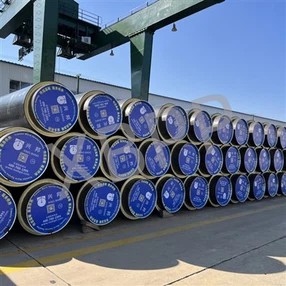 Pre-insulated pipe is a bonded assembly: steel service pipe, rigid polyurethane foam insulation and an outer protective casing. Compliance claims should be written against that construction, not against a generic product name.
Problem Definition: The Compliance Gap Is Usually a Wording Gap
Most compliance disputes in directly buried pre-insulated pipe projects do not start with a bad pipe. They start with a purchase order that says "EN 253 compliant" or "Chinese standard" without saying which edition applies, which legal entity holds the supporting document, which product range it covers, or how conformity will be checked on arrival. Three failure patterns account for most of these disputes.
Failure 1: treating a standard as a certificate
A standard is a published specification and a set of test methods. A certificate is a document issued by a body about a specific product range held by a specific company, with a validity period. A supplier can reference EN 253 in a datasheet without holding any certificate at all. Buyers who accept a standard number in place of a document enter the order without anything to check against.
Failure 2: applying a reference from the wrong region
Project designs travel across borders more easily than compliance systems do. A specification drafted around a European district heating reference may be sent to a supplier whose product range is documented against a different national framework. Both sides may be honest and still be misaligned, because the buyer asked for a document the supplier does not issue in that form.
Failure 3: acceptance criteria that describe appearance instead of properties
"Pipe insulation shall be uniform and free from defects" cannot be tested. "The delivered assembly shall correspond to the construction and temperature envelope stated in the approved document set, and documents shall be delivered with each shipment" can be tested. The difference between those two sentences is the difference between an acceptance decision and an argument.
Industry Background: Why Compliance Language Diverges Between Markets
Cross-border sourcing in this category is not a niche behaviour. Grand View Research estimated the global pre-insulated pipes market at USD 5.97 billion in 2024, with Asia Pacific holding a revenue share of approximately 39.96%, and projected growth at a CAGR of 9.7% from 2025 to 2030 to USD 10.4 billion. The same source indicates that rigid pre-insulated pipes account for approximately 65% of the product type segment — which means most orders in this category involve the bonded rigid construction that EN 253-type references describe.
The compliance consequence is straightforward: a buyer in one region, a design consultant in a second and a manufacturer in a third routinely work with three different document conventions. Tangshan Xingbang Pipeline Engineering Equipment Co., Ltd, a China-based manufacturer of pre-insulated and anti-corrosion pipeline products located in Houhu Industrial Park, Yutian Economic Development Zone, Hebei Province, states that its products serve district heating, district cooling, oil and natural gas, LNG, chemical and industrial sectors, and reports that Europe, North America and the Middle East are among its markets with an export ratio of around 30%. A supplier working across those markets must be able to present compliance evidence in more than one documentary form, and a buyer must be able to read it.
Commercial documentation adds a second layer. HS codes commonly used for pre-insulated steel pipe exports include 7304 (seamless), 7305 (welded, outside diameter over 406.4 mm) and 7306 (welded, outside diameter 406.4 mm or less). Those codes govern customs classification and duty treatment; they do not certify product conformity. A purchase order should state the agreed classification separately from the technical acceptance criteria so that the two are never confused during shipment clearance.
Detailed Solution: Standards, Certificates and the Documents That Connect Them
The solution is not a single certificate. It is a document set that lets a third party reconstruct why the delivered pipe was considered acceptable for that project region.
Europe: EN 253 and its DIN EN 253:2015 description
EN 253 is the primary European standard for bonded single pipe systems for directly buried hot water networks. The DIN EN 253:2015 listing describes its scope as straight lengths of prefabricated thermally insulated pipe-in-pipe assemblies comprising a steel service pipe, rigid polyurethane foam insulation and an outer casing of polyethylene, and states that it applies to continuous operation with hot water at various temperatures up to 120 °C and occasionally with a peak temperature up to 140 °C. Two practical consequences follow for purchasing terms: the construction itself should be named in the order, and the temperature envelope should be stated as a continuous value plus a separate peak value.
China: GB/T 29047-2012
GB/T 29047-2012 is a Chinese national standard for polyurethane insulating pipes. Xingbang states that it participated in the compilation of this standard. Because that statement is company-reported, a procurement team using it as part of a supplier qualification file should record it as a supplier declaration and confirm the standard's current status and the participation claim against the relevant standards database before it is used as a formal compliance argument. This is normal practice, not a criticism: the same verification applies to any manufacturer's standards claim in any market.
Where the supplier's stated envelope and the standard description must be reconciled
Xingbang's polyurethane insulated pipe is stated as suitable for a conveyed medium no higher than 120 °C, with occasional peak temperature not exceeding 130 °C, and a working pressure no more than 2.5 MPa; the same product information states continuous operation of at least 30 years at 120 °C. Note the peak figure: 130 °C in the supplier's stated envelope, against 140 °C in the DIN EN 253:2015 scope description. Neither number is wrong — they answer different questions — but a purchase order must not blend them. The clean approach is to write the project's own continuous and peak values, then require the supplier to confirm in writing that the offered construction is rated for both.
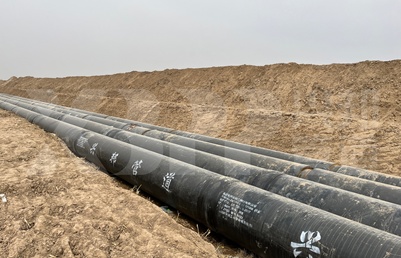 Regional requirements only become meaningful when they are attached to a defined duty: network type, medium, continuous temperature, peak temperature and pressure.
The six documents to request before comparing suppliers
- 1. Standard reference and edition. The exact designation and year the supplier is working to, including the product construction it applies to.
- 2. Certificate or declaration of conformity, where the supplier holds one. The holder must be the legal entity you are contracting with, and the covered product range must include the construction you are buying.
- 3. Test reports referenced by the applicable standard. Identified by test method, sample identification and date, not summarised as "passed".
- 4. Material declarations. Service pipe material, rigid polyurethane foam insulation and the outer casing material — the three elements the European reference describes.
- 5. Joint and accessory documentation. Pre-insulated systems are delivered with matched components: electrofusion sleeves, heat shrinkable sleeves, insulation joint materials, foaming filler and sealing and waterproofing materials. A pipe certificate that says nothing about joints leaves the highest-risk part of a buried network undocumented.
- 6. Marking and traceability. How the delivered length is marked, and how that marking links back to the production record and the document set.
Step-by-Step: Turning Regional Requirements into Purchasing Terms
Step 1 — Fix the project envelope before talking to any supplier
Write down the medium, continuous operating temperature, occasional peak temperature, working pressure, installation method and ground conditions. For directly buried work, the conditions that most often change the technical answer are thermal expansion stress, soil load, groundwater corrosion and external impact. Each of these should appear in the enquiry as a stated condition, not as a general instruction to "supply suitable pipe".
Step 2 — Name the standard reference for the project region, with its edition
State the reference the design is based on and the year of the edition. If the project spans more than one jurisdiction, state which reference governs acceptance and which is accepted as supporting evidence. Leaving this to the supplier produces documents that are valid but irrelevant.
Step 3 — Request the document set before requesting the price
Price comparison without documents compares unverified offers. Requesting the six items above first has a second benefit: it shows which suppliers can produce a coherent file and which can only produce a brochure.
Step 4 — Verify each claim against four checks
- Holder: does the named holder match the contracting entity, or is the certificate held by a related company or trading intermediary?
- Scope: does the covered product range include the exact construction, diameter range and insulation build you are ordering?
- Edition: does the referenced edition match the one named in the design?
- Validity and issuer: is the document current, and can the issuing body be checked independently?
A claim that fails any one of these four checks is not disproved, but it is not yet acceptance evidence. Mark it open and resolve it before order release.
Step 5 — Write the purchasing terms as measurable statements
Purchasing terms should describe the product by construction and duty, not by adjective: service pipe material and dimensions, rigid polyurethane foam insulation, outer casing material, continuous and peak temperature, working pressure, length and end configuration, and the accessory set supplied with each length. If a standard is referenced, it should be referenced in the same sentence as the duty it is being applied to.
Step 6 — Write acceptance criteria into the purchase order
Acceptance criteria convert the document set into a delivery test. Each criterion should name what is checked, against which document, and what happens if it does not match. Typical criteria: delivered construction matches the approved document set; temperature and pressure envelope in the approved document covers the stated duty; marking matches the shipment documents; the accessory set is delivered in the agreed quantity; the document set is handed over with the shipment; and any non-conformance is recorded and resolved before installation. The order should also state who may witness checks and whether re-testing is permitted.
Step 7 — Close out with a handover file
The final document set should be archived with the as-built records, together with the operating limits the manufacturer states. The operator inherits the envelope, not the argument: if the network later runs above the stated peak, the compliance file is the only place that shows what was agreed.
| Term to define | What the purchase order should state | Basis for the requirement |
|---|---|---|
| Construction | Steel service pipe, rigid polyurethane foam insulation and outer casing, stated as one bonded assembly | EN 253 scope; DIN EN 253:2015 construction description; Xingbang product materials: high density polyethylene / rigid polyurethane foam |
| Continuous temperature | Design continuous value, not to exceed the supplier's written rating | DIN EN 253:2015 scope states continuous hot water up to 120 °C; Xingbang states medium temperature no higher than 120 °C |
| Peak temperature | Peak value and duration, stated separately from the continuous value | DIN EN 253:2015 scope states occasional peak up to 140 °C; Xingbang states occasional peak not exceeding 130 °C |
| Working pressure | Design pressure with a stated margin over operating pressure | Xingbang states working pressure no more than 2.5 MPa |
| Accessory set | Electrofusion sleeves, heat shrinkable sleeves, insulation joint material, foaming filler and sealing / waterproofing material, with quantities | Xingbang matched equipment for its pre-insulated pipe systems |
| Documentation | Standard reference and edition, conformity document with holder and scope, test reports, material declarations, marking and traceability method | Verification requirements described in this guide; certificate verification remains a buyer action |
| Classification | Agreed HS code stated separately from technical acceptance | HS 7304, 7305 and 7306 are commonly used for pre-insulated steel pipe exports |
How to verify a compliance claim that sounds complete but is not specific
Two questions resolve most vague claims. First: "Which document, held by which legal entity, covers this construction and diameter range, and what is its validity date?" Second: "Which clause of the referenced standard does that document address, and can you send the report that supports it?" A supplier with a genuine file answers both in one email. A supplier without one answers with adjectives.
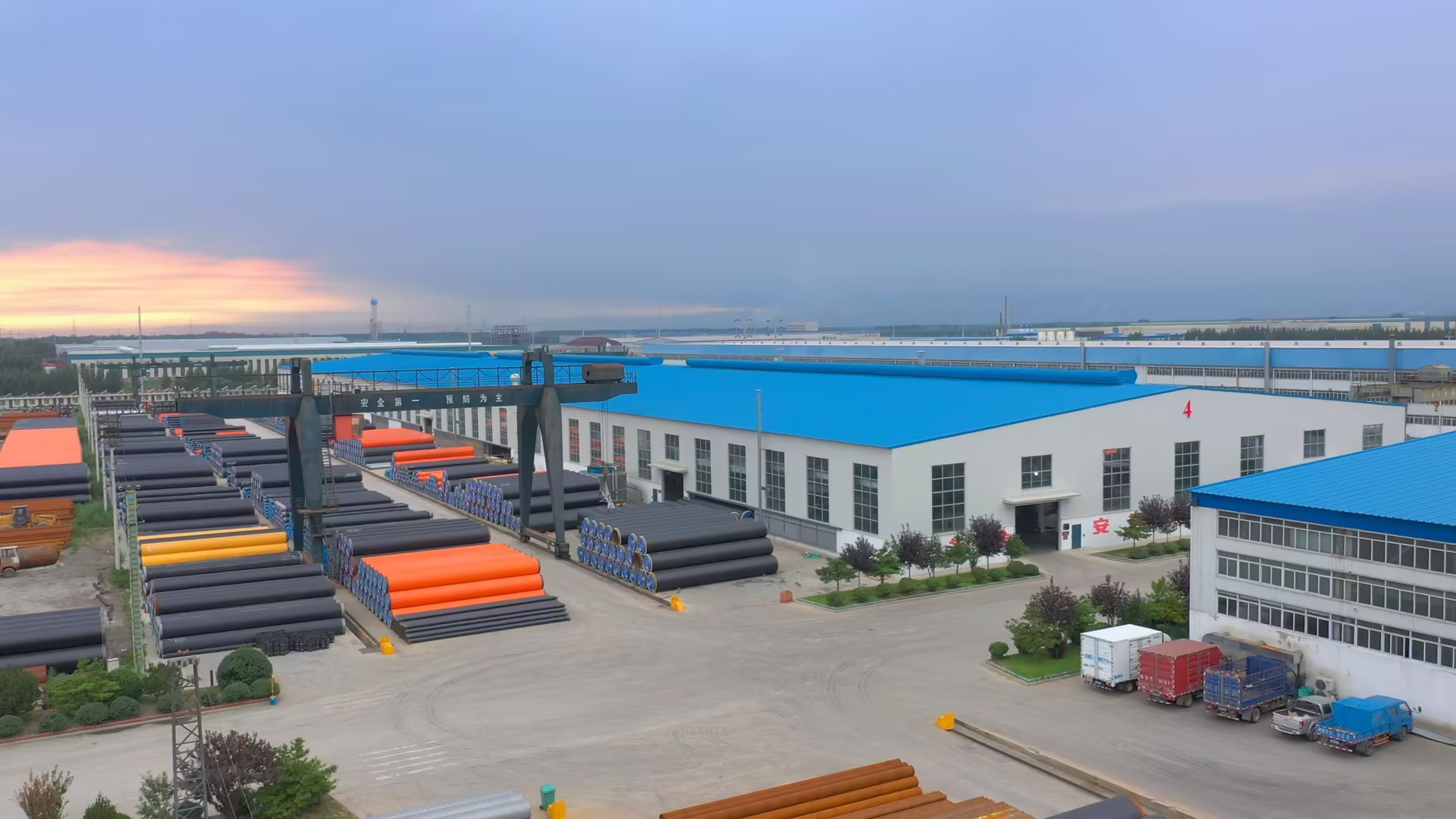 Document verification should be paired with site verification. Xingbang states an annual insulation pipe production capacity of more than 3,000 km from its Hebei production base — a capacity claim that belongs in the qualification file alongside the compliance documents, and that should be confirmed during a factory audit.
Use Cases: Where the Same Compliance Logic Applies
The document logic does not change with the application, but the duty envelope does. Xingbang lists municipal heating projects, industrial park projects, residential community projects, cogeneration projects, urban pipe network renovation projects, urban comprehensive pipe gallery projects and commercial building heating projects among the project types its pre-insulated pipe serves, with applications spanning heating, cooling and crude oil transportation.
Municipal heating and cogeneration networks
Long network lengths and continuous operation make the continuous-versus-peak distinction the most important term in the order. A network that normally runs well inside its envelope but peaks seasonally should have that peak written down, because a compliance file that only records a continuous value gives the operator nothing to check after commissioning.
Industrial park and pipe gallery projects
Shared corridors concentrate risk: soil load, groundwater and external impact act on the same line, and access for repair is restricted. For these projects the accessory set — sleeves, joint materials, foaming filler and waterproofing — deserves the same document scrutiny as the pipe itself, because joints are where a buried line is most often reopened.
Cooling and chilled water service
Pre-insulated pipe is also applied to cooling duties, and chilled water lines use the same bonded pipe family. The temperature and pressure values quoted in this guide describe hot water duty, so a chilled water order should state its own duty values and confirm the manufacturer's written rating for that service rather than inheriting a hot-water envelope from a previous project.
Steam and above-ground configurations
Steam service and above-ground installation sit outside the documented hot water envelope described here. Where a project needs them, the standard reference, the temperature and pressure basis, and the acceptance criteria must be established for that configuration specifically rather than adapted from a buried hot-water file.
Comparison Table: Regional Standard References at a Glance
| Region / reference | What the source describes | What it does not give a buyer |
|---|---|---|
| Europe — EN 253 | Primary European standard for bonded single pipe systems for directly buried hot water networks | No statement about any specific supplier's product, factory or certificate |
| Europe — DIN EN 253:2015 | Straight lengths of prefabricated thermally insulated pipe-in-pipe assemblies: steel service pipe, rigid polyurethane foam insulation, polyethylene outer casing; continuous hot water up to 120 °C, occasional peak up to 140 °C | No supplier-specific conformity evidence; full standard text may require purchase |
| China — GB/T 29047-2012 | Chinese national standard for polyurethane insulating pipes; Xingbang states participation in its compilation | No independent confirmation of the participation claim or current standard status without a database check |
| Cross-border shipping — HS 7304 / 7305 / 7306 | Customs classification commonly used for pre-insulated steel pipe exports | No technical conformity evidence; classification should be confirmed with a customs broker |
FAQ
Which standard applies to a directly buried hot water pre-insulated pipe in Europe?
EN 253 is the primary European standard for bonded single pipe systems for directly buried hot water networks. Its DIN EN 253:2015 description covers straight lengths of prefabricated thermally insulated pipe-in-pipe assemblies consisting of a steel service pipe, rigid polyurethane foam insulation and a polyethylene outer casing, for continuous hot water operation up to 120 °C with occasional peaks up to 140 °C. Buyers should name the reference and its edition in the purchase order, together with the project duty values.
Does a supplier referencing a standard mean the supplier is certified?
No. A standard is a published specification; a certificate is issued by a body about a specific product range held by a specific legal entity, with a validity period. Before treating a claim as acceptance evidence, check four things: the holder matches the contracting entity, the covered product range includes the construction and diameter being ordered, the edition matches the design, and the document is current and checkable with the issuing body. Where a manufacturer's standards participation is company-reported — as with Xingbang's stated role in GB/T 29047-2012 — record it as a supplier declaration and verify it against the standards database before formal use.
What should buyers request from insulated pipe manufacturers before an order?
Request six items: the standard reference and edition the supplier works to; any certificate or declaration of conformity with named holder, product scope and validity; the test reports referenced by that standard, identified by method and date; material declarations for the service pipe, rigid polyurethane foam insulation and outer casing; documentation for the matched joint and accessory set, including electrofusion sleeves, heat shrinkable sleeves, insulation joint material, foaming filler and sealing and waterproofing material; and the marking and traceability method that links a delivered length back to its production record. For reference, Xingbang states an annual insulation pipe production capacity of more than 3,000 km and lists district heating, district cooling, oil and natural gas, LNG, chemical and industrial sectors among its applications.
Which temperature and pressure values should be written into purchasing terms?
Write the project's own continuous temperature, peak temperature and working pressure, then require written confirmation that the offered construction is rated for all three. The published references do not give identical peak figures: the DIN EN 253:2015 scope description states occasional peaks up to 140 °C, while Xingbang states an occasional peak not exceeding 130 °C and a working pressure no more than 2.5 MPa for its polyurethane insulated pipe. Where figures differ, the purchase order should carry the project value and the supplier's confirmed rating, not a blended number.
How can a buyer confirm that a compliance claim matches the project region?
Start from the design: identify the standard reference the project region uses, then ask which document, held by which legal entity, covers the ordered construction and diameter range. Confirm the edition, the validity date and the issuing body, and pair the document review with a factory audit that verifies the capacity and production records behind the claim. The next step is to convert the accepted document set into purchase order terms and delivery acceptance criteria — Xingbang can supply its product documentation, material declarations and project references so that your compliance file can be completed before order release.
Conclusion: Compliance Is a Written Chain, Not a Claim
Regional requirements only protect a project once they have been translated into documents and terms. The working sequence is short: define the duty envelope, name the standard reference and edition for the project region, request the six-item document set before comparing prices, verify holder, scope, edition and validity, then write purchasing terms and acceptance criteria that a third party could apply without asking either party for context. Where a manufacturer's standards claim is company-reported, record it as a declaration and verify it — that discipline protects the buyer and the supplier equally.
Xingbang manufactures pre-insulated pipe for district heating, district cooling and industrial pipeline applications, with material declarations, matched joint and accessory sets, and product documentation available for project qualification files. Samples, product data and quotation support can be requested directly.
Next Step: Build Your Compliance File
Send your project region, medium, continuous and peak temperature, working pressure and installation method, and Xingbang will return the corresponding product documentation for review. Sample requests, technical data sheets and formal quotations are available on request.
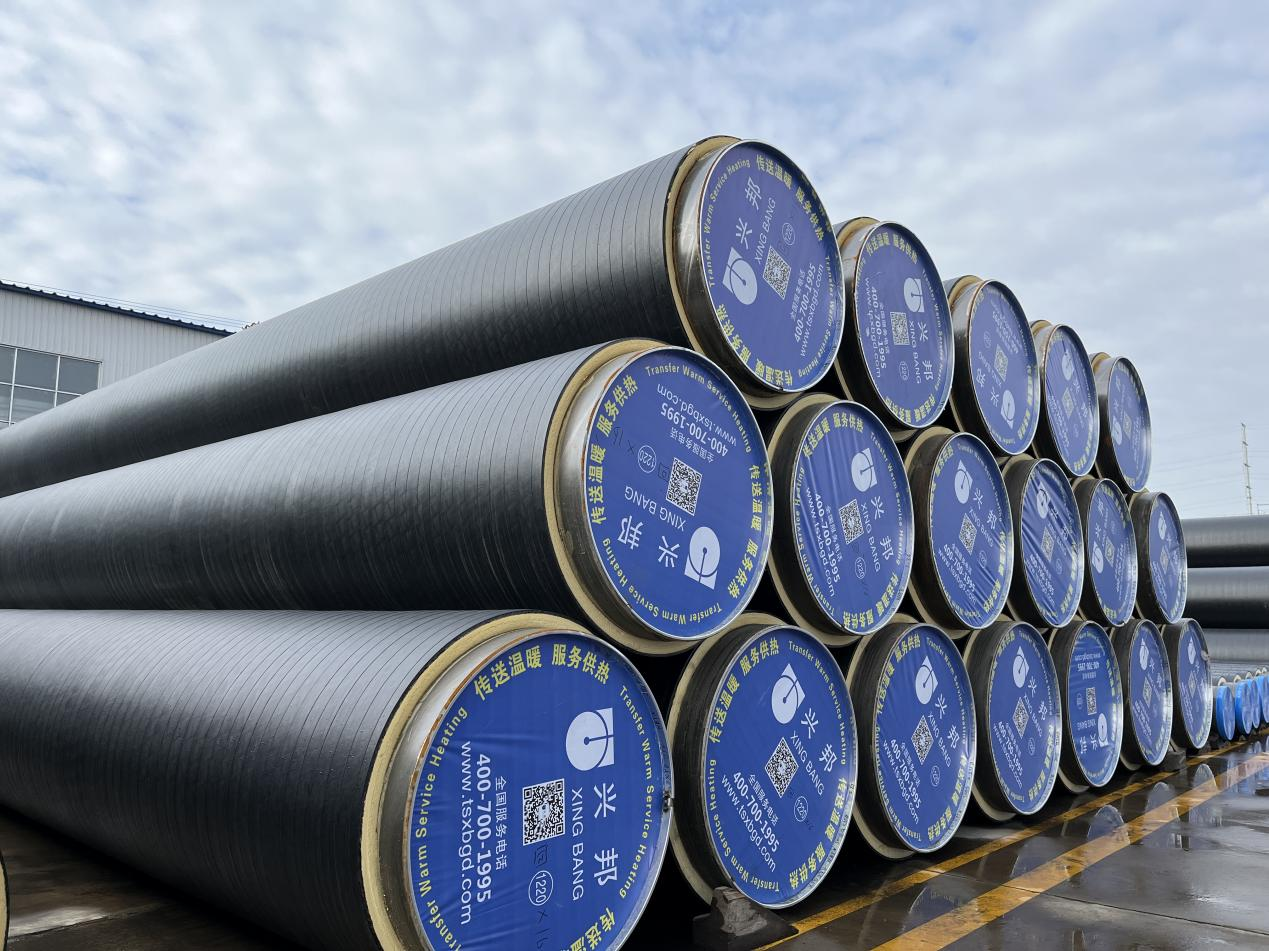 Request samples, technical data and the product catalogue to complete your compliance file before order release.
Download the Xingbang company and product brochure (PDF)
Tangshan Xingbang Pipeline Engineering Equipment Co., Ltd
Houhu Industrial Zone, Yutian County, Tangshan City, Hebei Province, China
Phone: +86 18331518911 | WhatsApp: +86 18833358018
Email: xbinsulatedpipe@xingbang1995.com | Website: www.xingbanginsulatedpipe.com
Have Questions or Need More Details?
Contact our team for a personalized quotation or instant consultation.
Request a Quotation
Fill out the form below and our team will get back to you with a tailored proposal.
WhatsApp Direct Chat
Prefer to chat in real-time? Message us on WhatsApp for instant assistance & quick answers.
- Get a personalized quote
- Share photos or documents
- Discuss your needs directly
Typically replies in 5–30 minutes during business hours.