
Pre-Insulated Pipe Technical Guide: Selection Parameters for Industrial Equipment
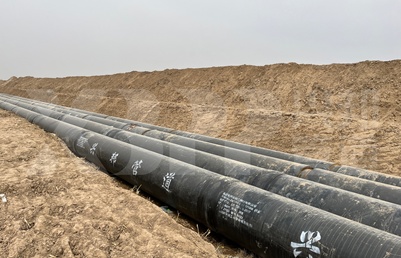
Pre-insulated pipe selection for industrial equipment is a parameter exercise before it is a purchasing exercise. Six parameter groups decide almost everything that follows: the conveyed medium and its temperature and pressure envelope; the service pipe material and dimensions; the insulation material and thickness; the outer jacket type and the installation condition; the joint, fitting and accessory system; and finally quantity, verification, documentation and delivery. Fix those six groups in that order and quotations become comparable. Skip them and the supplier fills the gaps with defaults.
This technical guide is written for engineers, procurement managers and industrial equipment buyers working at the research and evaluation stage. It sets out what has to be defined before sourcing pre-insulated pipe, why each parameter constrains the others, and how the parameter set shifts between district heating, district cooling, industrial plant and building services applications.
Problem Definition: Why Pre-Insulated Pipe Gets Mis-Specified
Most mis-specification begins with a short request that names a product and a diameter and nothing else. A pre-insulated pipe is not a single part; it is a bonded assembly. In the Xingbang product range the construction is described by its material set - high density polyethylene and rigid polyurethane foam built around a service pipe. Because the layers are bonded, changing the insulation thickness changes the outer jacket diameter, and changing the jacket type changes how the pipe may be installed. Parameters cannot be negotiated one at a time.
The second source of error is treating project conditions as supplier choices. Four conditions are consistently named as the special requirements of buried pre-insulated pipe systems: thermal expansion stress, soil load, groundwater corrosion and external impact. These belong to the site and the route. They must be handed to the manufacturer as inputs, not discovered after installation.
The third is purpose. The functions expected of a pre-insulated pipe on an industrial project are already a specification list: reducing heat loss and delivering energy conservation and thermal insulation; lowering pipe network heat dissipation and improving heating efficiency; preventing pipeline corrosion and extending service life; enabling direct burial so that land occupation and civil engineering investment are reduced; providing waterproofing and moisture resistance against humid and saline-alkali underground geology; protecting the service pipe through high temperature resistance and anti-aging performance; and reducing later operation and maintenance cost while supporting safe, stable operation. Every one of those outcomes is produced by a parameter, not by a product name.
Industry Background: The Demand Context Behind the Parameters
The global pre-insulated pipes market was estimated at USD 5.97 billion in 2024 and is projected to reach USD 10.4 billion by 2030, growing at a CAGR of 9.7%, according to Grand View Research. Published estimates differ: Strategic Market Research values the same 2024 base at USD 9.8 billion, and MarketsandMarkets at USD 5.27 billion. Buyers should cite the source and date whenever a market figure is used in a project justification, because the divergence between research houses is larger than the growth rate itself.
The demand driver sits one level up. The global district heating market was valued at USD 209.34 billion in 2024 by SNS Insider, and Global Market Insights projects the combined district heating and cooling market to grow at a 5.7% CAGR from 2024 to 2032. Asia Pacific dominated the pre-insulated pipes market with a 39.96% revenue share in 2024 (Grand View Research), while Credence Research places Europe at approximately 38% of the global pre-insulated pipe systems market and identifies Asia-Pacific as the fastest-growing region with a 24% global market share in the same year.
Segment structure matters when choosing a configuration. Flexible pre-insulated pipes accounted for 72.2% of global revenue share in 2024 and the commercial end-use segment held a 43.8% revenue share in the same year (Grand View Research). The oil and gas segment held a 34.89% revenue share in 2023 (SNS Insider), and pre-insulated pipes for district cooling are projected to grow at a 9.48% CAGR on the strength of rising smart city projects.
Two reference points frame the technical envelope. EN 253 is the industry standard for pre-insulated bonded pipe systems for directly buried hot water networks, and polyurethane foam insulation for EN 253 pipes typically withstands temperatures up to 120 degrees C (250 degrees F). Where the service pipe is steel and the project follows North American practice, ASTM A53 is the primary American standard for seamless and welded black and hot-dipped galvanized steel pipe. Performance context is measurable: pre-insulated pipes reduce heat loss by more than 30% in modern district heating networks such as Copenhagen's, according to Strategic Market Research.
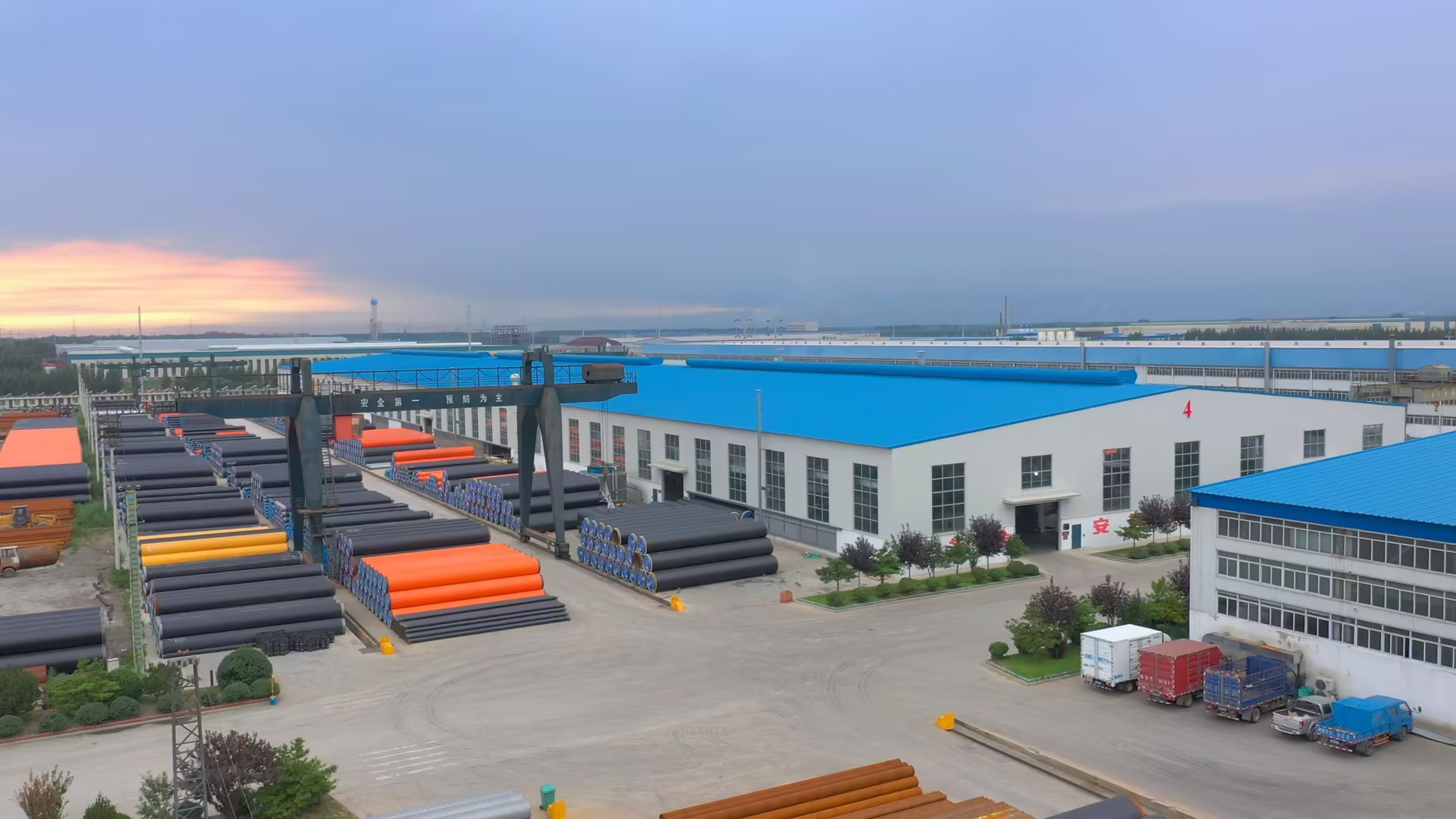
Tangshan Xingbang Pipeline Engineering Equipment Co., Ltd is a pre-insulated pipe manufacturer based in Houhu Industrial Park, Yutian Economic Development Zone, Hebei Province, China. The company is a member unit of the heating Standardization Technical Committee of China's Ministry of Housing and Urban-Rural Development and a participant in the formulation of the national standard for directly buried insulation pipes. It operates a 310,000 square metre site with 231 employees and a 30-engineer R&D team, serves central heating, central cooling, petroleum, chemical, LNG, gas and water conservancy projects, and exports to Europe, North America and the Middle East.
The Six Parameter Groups That Define an Industrial Pre-Insulated Pipe
1. Medium, Temperature and Pressure Envelope
Start with the duty. The polyurethane insulated pipe produced by Xingbang is specified for pipe network systems where the conveyed medium temperature is no higher than 120 degrees C, the occasional peak temperature does not exceed 130 degrees C, and the working pressure is no more than 2.5 MPa. Under continuous operation at 120 degrees C, the pipe is stated to operate for at least 30 years.
That envelope is consistent with wider industry practice, where PU foam insulation for EN 253 pipes typically withstands temperatures up to 120 degrees C. The important consequence is that the limit belongs to the insulation and bonding system, not to the pipe diameter. A duty that sits above the peak figure has to re-open the parameter set rather than inherit the hot water configuration.
2. Service Pipe Material and Dimensions
The service pipe carries the medium and sets the pressure rating, the connection dimensions and much of the material cost. Pipe diameter and length are customisable in the Xingbang configuration, and pipe material is itself a customisation parameter. Where steel service pipe is specified on North American projects, ASTM A53 - the primary American standard for seamless and welded black and hot-dipped galvanized steel pipe - is the usual reference, and galvanized service pipe is a recognised category within that standard.
3. Insulation Material and Thickness
Rigid polyurethane foam is the insulation used in the Xingbang product, and insulation thickness is customisable. Thickness is the parameter that ties the thermal target to the physical envelope: it must satisfy the heat loss or heat gain requirement of the network, and it then determines the outer diameter of the jacket and therefore the trench width or the support spacing. Set insulation thickness before jacket dimensions are agreed, not after.
4. Outer Jacket Type and Installation Condition
The jacket is the parameter that separates one project from another most clearly. For directly buried installation the outer jacket is high density polyethylene. For above-ground routing, a galvanized iron jacket pre-insulated pipe is the matching option. The jacket carries the environmental duty described in the application data: waterproofing and moisture resistance, resistance to humid and saline-alkali underground geology, and protection of the service pipe against external impact.
Chilled water duty shifts the emphasis again. Pre-insulated chilled water pipes serve cooling and cold preservation networks, where moisture control and watertight sealing decide whether the insulation keeps its value over the service life. The market signal matches the engineering logic: pre-insulated pipes for district cooling show a projected 9.48% CAGR driven by smart city development.
5. Joint, Fitting and Accessory System
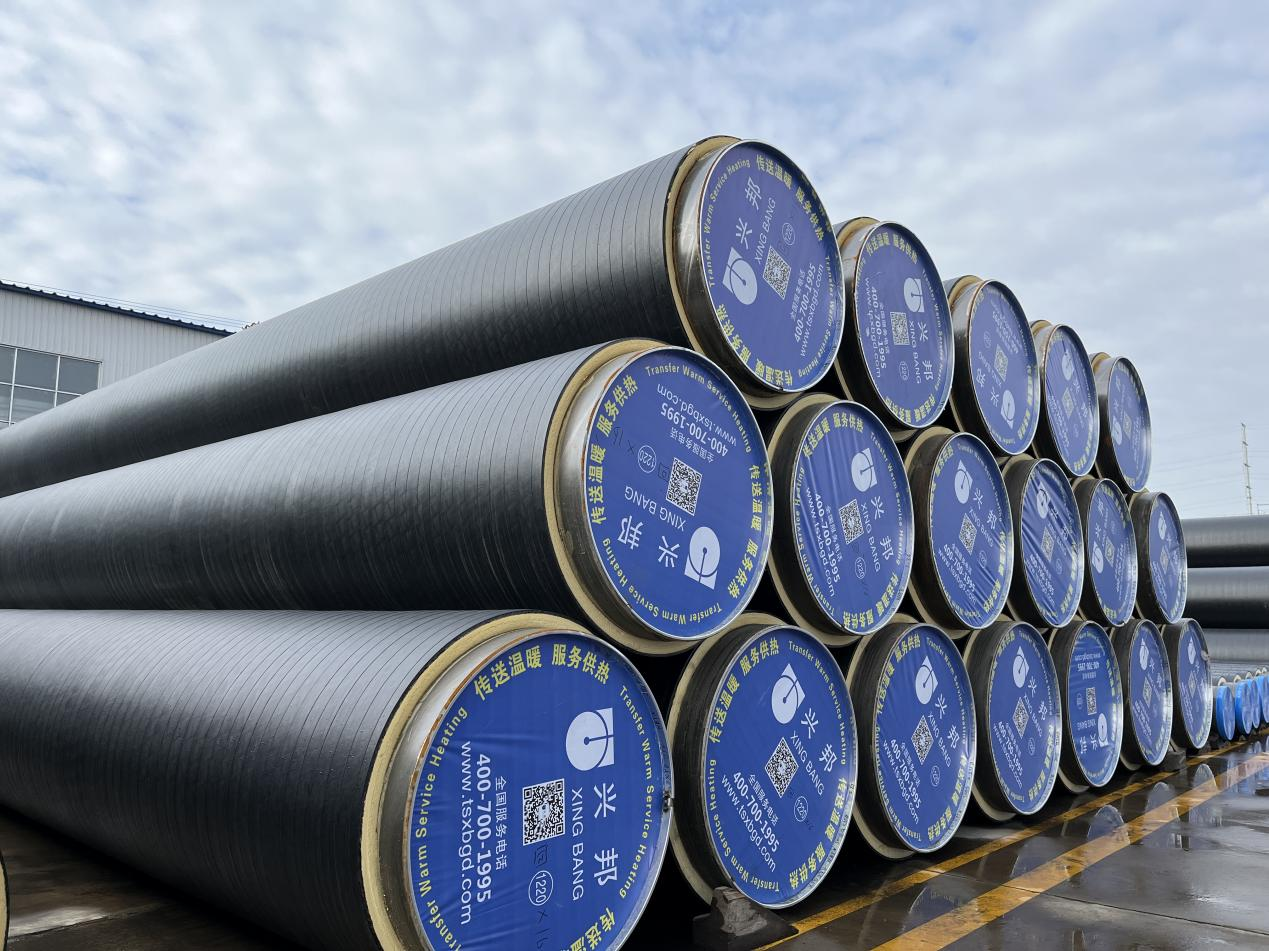
A buried network fails at its joints before it fails in the straight runs. The matched accessory set for the Xingbang pre-insulated pipe covers electrofusion sleeves, heat shrinkable sleeves, insulation joint material, foaming filler and sealing and waterproof material, and non-standard pipe fittings can be customised to the route. The practical rule is to treat the joint kit as part of the pipe specification - same supplier, same insulation system, same sealing standard - rather than as a separate commodity purchase.
6. Quantity, Verification, Documentation and Delivery
Commercial parameters deserve the same discipline as technical ones. Xingbang states a minimum order quantity of 1 km, a monthly capacity of 200 km, a lead time of 30 to 45 days, and 100% testing. Design for geological conditions and a custom intelligent monitoring system are both available as customisation options. Agree these before the enquiry so that the figure you receive is one you can actually schedule.
Step-by-Step: How to Sequence a Pre-Insulated Pipe Selection
- Write the duty envelope. Continuous temperature, occasional peak temperature, working pressure and operating pattern. For the polyurethane insulated pipe referenced here, that means no higher than 120 degrees C continuous, occasional peak not exceeding 130 degrees C, and working pressure no more than 2.5 MPa.
- Confirm the network type. Heating, cooling or crude oil transportation - the three application families served by this product - each place a different priority on heat loss, cold preservation or anti-corrosion behaviour.
- Choose the installation condition. Directly buried or above ground. Buried routes use a high density polyethylene jacket; above-ground routes use the galvanized iron jacket variant.
- Fix insulation thickness. Match it to the heat loss or heat gain target, then derive jacket diameter and route geometry from it.
- Fix the service pipe. Material, diameter and length, and the applicable standard where the specification is written against ASTM A53 or an equivalent.
- Specify the joint and accessory system. Electrofusion sleeves, heat shrinkable sleeves, insulation joint material, foaming filler, sealing and waterproof material, plus any non-standard pipe fittings the route requires.
- Feed the site conditions back in. Thermal expansion stress, soil load, groundwater corrosion and external impact are project inputs; custom design for geological conditions is available where the route justifies it.
- Close the commercial loop. Minimum order quantity of 1 km, lead time of 30 to 45 days, testing coverage, documentation, and the after-sales arrangement - Xingbang establishes dedicated on-site service teams that provide one-on-one, point-to-point support throughout a project.
Use Cases: How the Parameter Set Changes by Project Type
Municipal district heating renovation
A heating pipeline network renovation project in Uzbekistan used 6 km of pre-insulated pipe for cooling and heating supply and has been in stable operation for 5 years. The dominant parameters are the temperature envelope, insulation thickness and joint sealing, because renovation work usually imposes the existing trench and the existing connection points on the new pipe.
District cooling in urban development
The Cambodia-NaGa Phnom Penh district cooling project used 5 km of pre-insulated pipe and has operated stably for 10 years. Here moisture control, watertight sealing and cold preservation dominate, and the jacket and joint system carry more weight than the temperature rating of the medium.

Mining and heavy industrial plants
A copper mine project in Mongolia used 9 km of pre-insulated pipe for cooling and heating supply and has run stably for 3 years. Soil load, external impact and geological design dominate on this type of site, which is why custom design for geological conditions belongs in the enquiry rather than in a change order.
Campuses and hospitality buildings
A new university construction project in Ho Chi Minh City used 6 km of pipe with 7 years of stable operation, and a hotel project in Jamaica used 3 km with 2 years of stable operation. Medium-sized building clusters put the emphasis on non-standard fittings and on clean transitions between buried and above-ground sections, where the jacket type changes.
Large commercial developments
A bank project in Cambodia used 30 km of pre-insulated pipe for cooling and heating supply, with heat preservation as the recorded highlight, and has operated stably for 2 years. At 30 km, joint count rather than pipe length becomes the governing parameter, which is why the accessory system is specified together with the pipe.
Comparison Table: Pre-Insulated Pipe Configurations for Industrial Equipment Projects
| Configuration | Outer jacket | Medium and stated envelope | Installation | Dominant parameters |
|---|---|---|---|---|
| Directly buried hot water pre-insulated pipe | High density polyethylene | Hot water; no higher than 120 degrees C, occasional peak not above 130 degrees C, working pressure no more than 2.5 MPa | Direct burial, 24-hour continuous operation | Insulation thickness, joint sealing, soil load, groundwater corrosion |
| Above-ground pre-insulated pipe | Galvanized iron jacket | Hot water duties within the same stated envelope | Above ground, with buried-to-above-ground transitions | Mechanical protection, thermal expansion stress, support spacing |
| PU foam pre-insulated pipe for district heating networks | High density polyethylene | Hot water; PU foam insulation for EN 253 pipes typically withstands up to 120 degrees C | Buried network | Heat loss, standard compliance, joint integrity |
| Pre-insulated chilled water pipe | High density polyethylene | Chilled water for cooling and cold preservation networks | Buried cooling distribution | Moisture control, watertight sealing, waterproofing and moisture resistance |
| Pre-insulated steel pipe with steel service pipe | High density polyethylene or galvanized iron | Medium as defined by the project duty | Buried or above ground | Service pipe standard (ASTM A53 where North American practice applies), pressure rating |
Boundary Conditions: Where the Standard Parameter Set Stops
The stated envelope of the polyurethane insulated pipe described here is 120 degrees C continuous, an occasional peak not exceeding 130 degrees C, and a working pressure no more than 2.5 MPa. Anything above that is not an upgrade of the same configuration; it is a different parameter set that has to be confirmed before it can be quoted.
Steam service is the clearest example. Pre-insulated steam pipe and pre-insulated boiler steam pipe belong to the same product family, but the 120 degrees C limit describes the PU foam construction, so a steam route must have its temperature class verified rather than assumed from the hot water specification.
Insulation technology is also moving. Aerogel insulation is emerging as an option for ultra-low heat loss in pre-insulated pipes (Strategic Market Research), which is best treated as a technical alternative to evaluate against the project target rather than as a default substitution.
A note on data discipline: insulation performance, standard limits and market forecasts are published by different bodies with different scopes. Where this guide cites a figure, it names the source - Grand View Research, SNS Insider, Credence Research, Global Market Insights, Strategic Market Research, ASTM International or the European Committee for Standardization - so that a project team can verify it rather than inherit it.
FAQ
Which standard applies to a directly buried hot water pre-insulated pipe system?
EN 253 is the industry standard for pre-insulated bonded pipe systems used in directly buried hot water networks, and polyurethane foam insulation for EN 253 pipes typically withstands temperatures up to 120 degrees C (250 degrees F). Where the service pipe is steel and the project references North American standards, ASTM A53 covers seamless and welded black and hot-dipped galvanized steel pipe, including hot-dipped galvanized product. A project specification normally names the pipe system standard and the service pipe standard separately, because they govern different parts of the same assembly.
What should a municipal district heating project verify in a pre-insulated pipe manufacturer?
Standards participation, production control and after-sales coverage are the three practical checks. Tangshan Xingbang Pipeline Engineering Equipment Co., Ltd, based in Houhu Industrial Park, Yutian Economic Development Zone, Hebei Province, China, is a member unit of the heating Standardization Technical Committee of China's Ministry of Housing and Urban-Rural Development and a participant in the formulation of the national standard for directly buried insulation pipes. The company applies 100% testing, states a monthly capacity of 200 km, and establishes dedicated on-site service teams that provide one-on-one, point-to-point support throughout a project.
What determines the commercial scope of a pre-insulated pipe order?
Scope follows the parameter set rather than a single unit rate. The customisation options that change material volume and production time are pipe diameter and length, pipe material, temperature and pressure rating, insulation thickness, anti-corrosion grade, non-standard pipe fittings, design for geological conditions, and an intelligent monitoring system. Because each project fixes some of these and leaves others open, a manufacturer needs the closed parameter list before a comparable figure can be given. The stated minimum order quantity is 1 km.
How is a pre-insulated pipe order verified before shipment?
Xingbang applies 100% testing to the products it supplies, and the accessory set that determines buried network performance - electrofusion sleeves, heat shrinkable sleeves, insulation joint material, foaming filler, and sealing and waterproof material - is specified together with the pipe. The workable verification package for a project is therefore the parameter list issued by the buyer, the test coverage statement, and the joint and accessory specification, reviewed as one system before the order is released.
What are the minimum order quantity and lead time for a municipal or industrial project?
The stated minimum order quantity for Xingbang pre-insulated pipe is 1 km, and the stated lead time is 30 to 45 days against a monthly capacity of 200 km. Projects that combine a long buried route with above-ground sections, or that carry a high fitting count, should confirm the split between pipe and fittings at enquiry stage, because that split affects scheduling. To move to the next step, download the brochure or send the parameter list through Xingbang pre-insulated pipe for a quotation.
Conclusion
Pre-insulated pipe selection for industrial equipment rewards sequence more than speed. Define the medium, temperature and pressure envelope first; then the service pipe, the insulation thickness, the jacket type and installation condition, the joint and accessory system, and finally the quantity, verification and delivery terms. Everything the pipe is supposed to deliver - reduced heat loss, corrosion protection, direct burial without excessive civil work, waterproofing against underground conditions, and lower operation and maintenance cost over a service life measured in decades - is produced by those parameters rather than by a product name.
Where the duty stays inside the stated envelope of 120 degrees C continuous, an occasional peak not exceeding 130 degrees C and 2.5 MPa working pressure, the standard polyurethane configuration is a well-understood starting point. Where it does not, the parameter set has to be re-opened before it is quoted. Either way, the enquiry that arrives with a closed parameter list is the one that produces a comparable, schedulable answer.
Ready to define the parameter set?
Send the duty envelope, route condition and quantity for a quotation, or request the product catalogue. Xingbang supports customisation of pipe diameter and length, pipe material, temperature and pressure rating, insulation thickness, anti-corrosion grade, non-standard pipe fittings, design for geological conditions and intelligent monitoring systems, with a minimum order quantity of 1 km and a lead time of 30 to 45 days.
Tangshan Xingbang Pipeline Engineering Equipment Co., Ltd
Houhu Industrial Zone, Yutian County, Tangshan City, Hebei Province, China
Phone: +86 18331518911 | WhatsApp: +8618833358018 | Email: xbinsulatedpipe@xingbang1995.com
Have Questions or Need More Details?
Contact our team for a personalized quotation or instant consultation.
Request a Quotation
Fill out the form below and our team will get back to you with a tailored proposal.
WhatsApp Direct Chat
Prefer to chat in real-time? Message us on WhatsApp for instant assistance & quick answers.
- Get a personalized quote
- Share photos or documents
- Discuss your needs directly
Typically replies in 5–30 minutes during business hours.