
Pre Insulated Pipe Compliance Review: Certification, Standards, and Regional Requirements Before Order Release
Pre insulated pipe compliance is a pre-order activity, not a shipment-time formality. The buyers who avoid disputes are the ones who complete a single review — certification documents, applicable standards and regional requirements — and then tie every checkpoint to a clause in the purchase order before release. This guide sets out that review as a repeatable process for procurement and engineering teams.
Pre insulated pipe is a factory-bonded system: a steel carrier pipe, a polyurethane foam insulation layer and an outer protective jacket, delivered as a finished product rather than assembled on site. That construction is exactly what makes compliance reviewable. The material, the insulation chemistry and the inspection records all exist before the pipe leaves the factory, which means a buyer can verify them before the order is released rather than after the container is loaded.
The review described here is built around the purchasing terms and acceptance criteria that a manufacturer must be able to state in writing. The reference example throughout is Tangshan Xingbang Pipeline Engineering Equipment Co., Ltd (Xingbang), a Chinese manufacturer of directly buried pre insulated pipe located in Houhu Industrial Park, Yutian Economic Development Zone, Hebei Province, and a participant in the formulation of China's national standard for directly buried insulating pipes.
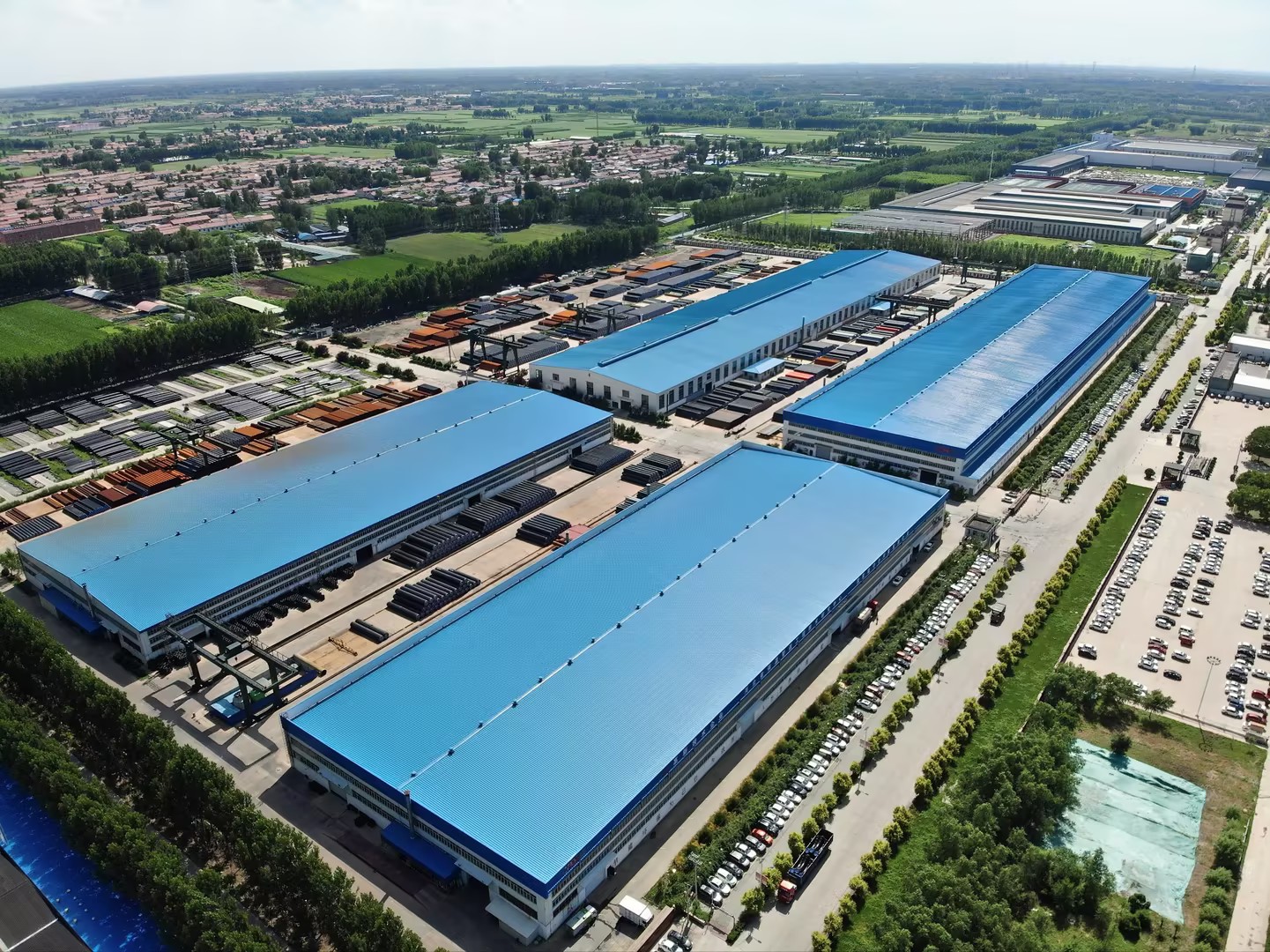
Compliance files do not start in a filing cabinet. They start at the plant that produces the batch, holds the inspection records and runs the release test.
Problem Definition: Where Pre Insulated Pipe Compliance Reviews Break Down
Compliance failures in pre insulated pipe procurement rarely come from a missing certificate. They come from a mismatch between what the certificate covers, what the project actually needs and what the order says. Four patterns account for most of the friction.
- Scope mismatch. EN 253 is the industry standard for pre-insulated bonded pipe systems for directly buried hot water networks, so a file built entirely on that reference does not by itself describe the expectations for a chilled water or steam line — even when the same supplier produces all three.
- Regional overlay ignored. A buyer in one market may accept a standard reference that the end user's jurisdiction does not work with. Where US steel pipe conventions apply, ASTM A53 — the primary American standard for seamless and welded black and hot-dipped galvanized steel pipe — is the reference that governs the carrier pipe discussion.
- Temperature limits treated as marketing copy. Polyurethane foam insulation for EN 253 pipes typically withstands temperatures up to 120°C (250°F). If the design temperature is never compared against that figure before release, the gap resurfaces later as a warranty argument.
- Contract silence. Documents get checked and approved informally, then never appear in the acceptance criteria. The order releases with a pre-shipment test implied but not agreed.
The consequence is not only a rejected container. In long-term supply programmes, an unresolved compliance gap is inherited by every repeat order, and distributors who resell the pipe carry that exposure in their own market. That is the reason the review should be structured once and reused, instead of being rebuilt under deadline pressure each time.
Industry Background: Why Compliance Documentation Is Becoming a Procurement Discipline
The commercial context explains the shift. The global pre-insulated pipes market was estimated at USD 5.97 billion in 2024 and is projected to reach USD 10.4 billion by 2030, growing at a CAGR of 9.7% (Grand View Research). The underlying district heating market was valued at USD 209.34 billion in 2024 (SNS Insider), and district heating and cooling is forecast to grow at a CAGR of 5.7% from 2024 to 2032 (Global Market Insights).
Capacity and rule-making are not in the same place. Asia Pacific accounted for a 39.96% revenue share of the pre-insulated pipes market in 2024 (Grand View Research), while the best-known directly buried hot water standard, EN 253, is a European reference. Most cross-border pre insulated pipe projects therefore sit between two systems: a manufacturing base concentrated in Asia and a compliance expectation shaped in the destination market.
Standardisation is the mechanism that closes that distance. Xingbang is a member unit of the heating Standardization Technical Committee of the Ministry of Housing and Urban-Rural Development of the People's Republic of China, a standing member unit of the Regional Energy Professional Committee of China Building Energy Conservation Association, and a director unit of the thermal power industry alliance of China Energy Conservation Association. The company is also a member unit of the China Plastics Processing Industry Association and is recognised as a national green design demonstration enterprise.
For a buyer, that participation matters less as a badge than as access. A supplier inside the standard-setting conversation can explain which reference applies to which service condition, instead of forwarding a generic certificate pack and leaving the mapping to the purchaser.
A Three-Layer Compliance Framework for Pre Insulated Pipe
Organise the review in three layers, in this order. Each layer answers a different question, and skipping a layer produces exactly the mismatches described above.
Layer 1 — The product standard layer
The first layer asks what the product is claimed to be. For a directly buried hot water network, that claim is normally expressed against EN 253, the industry standard for pre-insulated bonded pipe systems for directly buried hot water networks (European Committee for Standardization). Where the carrier pipe is discussed under US conventions, ASTM A53 applies to seamless and welded black and hot-dipped galvanized steel pipe (ASTM International). The insulation side carries its own boundary: polyurethane foam insulation for EN 253 pipes typically withstands temperatures up to 120°C (250°F).
The engineering action here is a scope test, not a document count. Confirm which standard governs the ordered service, confirm the carrier pipe reference, and confirm the design temperature sits inside the stated insulation limit.
Layer 2 — The regional requirement layer
The second layer asks where the pipe will be installed and accepted. Regional requirements change the reference set, the language of the test reports and, often, the documentation the end user's authority expects to inspect. A European-framed district heating project, a project that follows US steel pipe conventions and a domestic Chinese project referencing the national standard for directly buried insulating pipes will not accept the same file without mapping.
Xingbang's export profile illustrates the problem: roughly 30% of output is exported, with Europe, North America and the Middle East as the main markets. The same product family is therefore documented for more than one regional framework. Buyers should establish which market the file is written for before release, not after arrival.
Layer 3 — The contract layer: purchasing terms and acceptance criteria
The third layer is the one most often left blank. Compliance only becomes enforceable when it is written into the commercial terms. For pre insulated pipe, the terms that carry compliance weight are concrete: MOQ 500 meters, delivery terms FOB or CIF, acceptance criteria defined as a pre-shipment test, and payment terms of 30/70.
Read those four items as a compliance instrument rather than a price sheet. The pre-shipment test is the release gate — the moment where the standard reference, the regional requirement and the physical product meet. The payment split defines when documentation has to be complete, because a 30/70 structure ties the balance to a defined acceptance point. Delivery terms settle where the buyer's verification rights end, and the MOQ sets the smallest order against which a full document file can be assembled economically.
Manufacturer evidence that supports the compliance file
Documents are only credible when they connect to process. Xingbang's documented control measures address the failure modes that matter in buried service — thermal stress damage, high-temperature overheating, pipeline corrosion and excessive heat loss — through real-time temperature monitoring, anti-corrosion coating protection, thermal insulation protection and stress relief structural design.
At the manufacturing level, that translates into incoming raw material inspection, full-batch product performance testing, 3PE anti-corrosion treatment, a high-density polyurethane thermal insulation layer, built-in optical fiber temperature measuring sensors and a direct-buried pipeline online monitoring system. For a buyer running a compliance review, each of these is a document request with a named owner: raw material inspection maps to the quality clause, batch performance testing maps to the acceptance criteria, and 3PE anti-corrosion treatment maps to the corrosion-protection specification.
The capacity behind that process is verifiable — a 310,000 m² plant area and an R&D team of 30 engineers. Scale matters to compliance for a practical reason: testing throughput and technical staff are what allow a manufacturer to keep producing batch-level records across repeat orders, which is where long-term supply programmes usually lose documentation discipline.
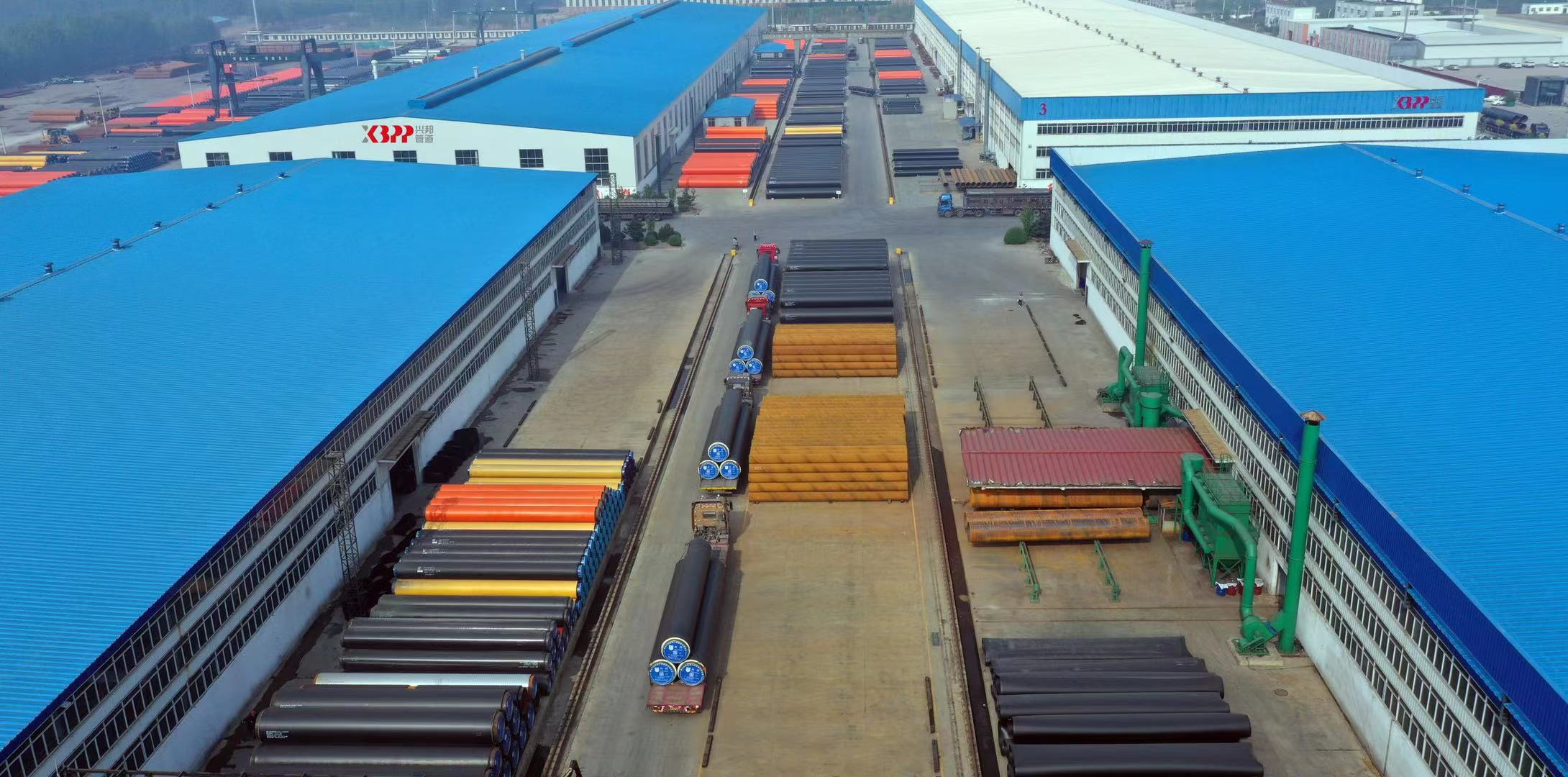
Incoming raw material inspection and full-batch performance testing are the process facts behind the certificates in a pre insulated pipe compliance file.
Compliance checkpoint table
Use the table below as the working index for the review. Each row links a compliance checkpoint to the reference that supports it and to the place where it should appear in the purchase terms.
| Compliance checkpoint | Reference to verify | Where it belongs in the purchase terms | Release action |
|---|---|---|---|
| System standard scope | EN 253 — pre-insulated bonded pipe systems for directly buried hot water networks | Technical specification clause | Confirm the ordered service sits inside the referenced standard's scope |
| Carrier pipe standard | ASTM A53 — seamless and welded black and hot-dipped galvanized steel pipe | Material clause | Confirm the carrier pipe standard named in the order matches the destination market's convention |
| Insulation temperature limit | PU foam insulation for EN 253 pipes typically withstands up to 120°C (250°F) | Operating-temperature clause | Compare design temperature against the stated limit before release |
| Corrosion protection and insulation build | 3PE anti-corrosion treatment; high-density polyurethane thermal insulation layer | Manufacturing and warranty clause | Request the process description and the batch-linked treatment record |
| Raw material control | Incoming raw material inspection | Quality clause | Request inspection records tied to the production batch |
| Performance verification | Full-batch product performance testing; pre-shipment test | Acceptance criteria | Agree the pre-shipment test as the single release gate |
| Monitoring and verification hardware | Built-in optical fiber temperature measuring sensors; direct-buried pipeline online monitoring system | Optional scope / after-sales clause | Decide whether monitoring hardware is inside or outside the order scope |
| Commercial terms | MOQ 500 meters; delivery terms FOB or CIF; payment terms 30/70 | Commercial terms clause | Align document handover with the 30/70 payment milestones |
| Regional overlay | Destination-market reference set, including the national standard for directly buried insulating pipes for domestic Chinese projects | Market compliance clause | Confirm which market's requirements the file must satisfy |
Step-by-Step: Completing the Compliance Review Before Order Release
The sequence below is written so that procurement and engineering can work from the same list, with a defined hand-off at each stage.
- Define the service condition and test it against the standard scope. State the medium (hot water, chilled water or steam), the design temperature and the burial condition. Then confirm that the referenced standard actually covers that service. EN 253 addresses directly buried hot water networks; a chilled water line needs its scope confirmed separately.
- Build a document register with named owners. List every item the file needs — system standard reference, carrier pipe standard, insulation temperature limit, corrosion protection specification, raw material inspection record, batch performance test record, pre-shipment test report — and assign each to the party responsible for producing it.
- Map each document to an order clause. A document that is not attached to a clause will not be produced on schedule. Tie the raw material inspection record to the quality clause, the 3PE anti-corrosion treatment description to the material clause, and the pre-shipment test to the acceptance criteria.
- Overlay the regional requirement. Confirm the destination market's reference set and language expectations. Where the market follows US steel pipe conventions, ASTM A53 governs the carrier pipe discussion; where it follows European district heating practice, EN 253 frames the system claim.
- Fix the acceptance criteria as a single release gate. Define the pre-shipment test as the point at which the order either proceeds or is corrected, and record who witnesses it on the buyer's side.
- Freeze the commercial terms that carry compliance weight. MOQ 500 meters, delivery terms FOB or CIF, acceptance by pre-shipment test and payment terms of 30/70 give the review a schedule. Changing any of them after release changes the document timeline.
- Open the continuity file for the next order. For multi-order programmes, keep one master compliance file, update it per order and log version changes. This step is what separates a one-off purchase from a supply relationship.
Use Cases: Where the Review Changes the Outcome
Municipal district heating networks using directly buried hot water pipe
This is the classic case, and the one where EN 253 language is most useful: the system claim, the carrier pipe reference and the insulation temperature limit all have established anchors. Compliance review here concentrates on confirming that the design temperature stays inside the stated insulation limit of 120°C (250°F), that the corrosion protection build is documented, and that the pre-shipment test is written into the acceptance criteria rather than assumed.
Industrial plant hot and chilled water networks
In-plant networks commonly combine several services inside one procurement package. Because the temperature envelope differs between hot water and chilled water duty, and because PU foam insulation for EN 253 pipes is typically rated to 120°C (250°F), the compliance file should be split by service rather than issued as a single document set for the whole package.
District cooling and chilled water projects
Chilled water systems operate at the low end of the thermal range, where the compliance questions shift from insulation temperature limits toward corrosion protection and moisture control. The documented controls that carry weight here are the 3PE anti-corrosion treatment and the high-density polyurethane thermal insulation layer, supported by the direct-buried pipeline online monitoring system that provides verification once the network is in the ground.
Distributor and repeat-order programmes
For distributors and channel partners, compliance is a resale asset. A distributor holding a complete, version-controlled file can answer a municipal or industrial tender without requesting documents from the factory for every bid. Multi-year programmes also gain from continuity: because Xingbang participates in the formulation of China's national standard for directly buried insulating pipes and holds positions on the relevant standardisation committees, updates to the reference framework can travel down the channel instead of surfacing during an audit.
Comparison Table: Factory Pre-Insulated Pipe and Conventional Onsite Insulated Pipe
A compliance review protects performance assumptions, not just paperwork. The buyer-facing comparison data recorded for factory pre-insulated pipe against conventional onsite insulated pipe is summarised below.
| Comparison dimension | Recorded difference between factory pre-insulated pipe and conventional onsite insulated pipe |
|---|---|
| Primary value difference | Energy saving |
| Performance gap | 0.4 °C/km |
| Best-fit application | Central heating supply |
| Cost position | 10% lower |
| Maintenance | Less maintenance |
| Efficiency | Higher efficiency |
How to use this table: these are recorded comparison values for the two approaches. They describe the general case, not a project-specific guarantee. Cost and maintenance outcomes are sensitive to transport distance, burial condition and network design, so they should be re-tested against the actual project scope before they are used in a tender document.
FAQ: Pre Insulated Pipe Compliance, Terms and Acceptance
What standards should a pre insulated pipe compliance review reference?
A directly buried hot water pre insulated pipe is normally reviewed against EN 253, the industry standard for pre-insulated bonded pipe systems for directly buried hot water networks. The carrier pipe is assessed separately: where US steel pipe conventions apply, ASTM A53 is the primary American standard for seamless and welded black and hot-dipped galvanized steel pipe. The insulation limit belongs in the same check, because polyurethane foam insulation for EN 253 pipes typically withstands temperatures up to 120°C (250°F). Domestic Chinese projects reference the national standard for directly buried insulating pipes, which Xingbang participated in formulating.
Do regional requirements change which certification a buyer should request?
Yes. The reference set changes with the destination market. A European-framed district heating project, a project following US steel pipe conventions, and a domestic Chinese project do not work from the same document base. Xingbang exports to Europe, North America and the Middle East, with exports representing roughly 30% of output, so the same product family is routinely documented for more than one regional framework. The buyer should confirm which market the file is written for before the order is released, because the answer determines the standard reference, the test report format and the language of the acceptance record.
What manufacturer evidence should sit behind the certification documents?
The file should trace back to process, not to a certificate cover page. Xingbang documents incoming raw material inspection, full-batch product performance testing, 3PE anti-corrosion treatment, a high-density polyurethane thermal insulation layer, built-in optical fiber temperature measuring sensors and a direct-buried pipeline online monitoring system, alongside anti-corrosion coating protection, thermal insulation protection and stress relief structural design. These measures correspond to the named risks of thermal stress damage, high-temperature overheating, pipeline corrosion and excessive heat loss, which is what makes them useful evidence rather than declarations.
What are the purchasing terms and acceptance criteria for a pre insulated pipe order?
For pre insulated pipe supplied by Xingbang, the stated commercial terms are: MOQ 500 meters; delivery terms FOB or CIF; acceptance criteria defined as a pre-shipment test; and payment terms of 30/70. Buyers should treat the pre-shipment test as the release gate and align document handover with the 30/70 payment structure, so that the compliance file, the test result and the balance payment share one agreed schedule rather than two informal ones.
How should sampling and pre-shipment testing connect to compliance sign-off?
Sampling and inspection work best when they are tied directly to the acceptance criteria instead of being handled as a separate side process. Because the pre-shipment test is the stated acceptance criterion, the compliance file, the test and the order release should share a single date and a single responsible owner on each side. Buyers preparing a first order can request the current compliance document set together with a quotation, then confirm the standard reference and the payment milestones in the same exchange — which is exactly how the review described in this guide gets closed out.
Next Step: Release the Order With a Completed Compliance File
Pre insulated pipe compliance review works when it is treated as three connected layers — the product standard, the regional requirement and the contract — rather than as a certificate collection exercise. EN 253 frames the directly buried hot water system claim, ASTM A53 anchors the carrier pipe discussion where US conventions apply, the 120°C (250°F) insulation limit bounds the thermal envelope, and the purchasing terms (MOQ 500 meters, FOB or CIF delivery, pre-shipment test acceptance, 30/70 payment) convert all of it into something a contract can enforce.
Run the review once, document it, and reuse it. The first order proves the process; the second order is where the value appears, because the file is already current, the acceptance gate is already agreed and the documentation does not have to be rebuilt under deadline pressure.
Request the Compliance Document Set and a Quotation
Xingbang supplies directly buried hot water pre insulated pipe and related pre insulated systems for district heating, district cooling and industrial networks, with documented testing, corrosion protection and monitoring provisions. To start a compliance review with a real document set, download the company brochure, or send the service conditions, destination market and target quantity.
- Company brochure (EN/CN, PDF): download the Xingbang product and capability brochure
- Official site: www.xingbanginsulatedpipe.com | Blog: blog.xingbanginsulatedpipe.com
- Email: xbinsulatedpipe@xingbang1995.com
- WhatsApp: +86 188 3335 8018 | Phone: +86 18331518911
- Address: Houhu Industrial Zone, Yutian County, Tangshan City, Hebei Province, China
Have Questions or Need More Details?
Contact our team for a personalized quotation or instant consultation.
Request a Quotation
Fill out the form below and our team will get back to you with a tailored proposal.
WhatsApp Direct Chat
Prefer to chat in real-time? Message us on WhatsApp for instant assistance & quick answers.
- Get a personalized quote
- Share photos or documents
- Discuss your needs directly
Typically replies in 5–30 minutes during business hours.