
Pre-Insulated Pipe Acceptance Disputes: A Problem-Solution Guide to Purchasing Terms
A pre-insulated pipe delivery is rarely stopped by a defective pipe. It is stopped by a sentence that was never written. When a buyer and a supplier disagree about what “acceptable” means, the container waits at the port, the balance payment stays frozen, and the project schedule absorbs a delay that no technical fix can recover afterwards.
This guide treats that situation as a purchasing-terms problem rather than a manufacturing problem. It sets out what to lock in when a pre insulated pipe quotation is issued and again when the purchase order is confirmed, what to verify at handover, and how to handle a failed acceptance check so that one disputed delivery does not end a supplier relationship that took years to build.
Problem Definition: The Dispute Is Usually About Wording, Not Pipe Quality
An acceptance dispute exists when a delivery has been produced and shipped against a confirmed order, but the buyer and the supplier cannot agree whether the goods meet the requirement — and payment, unloading, or handover has stopped as a result.
In pre-insulated pipe procurement, four wording gaps produce most of these situations:
- The standard reference is implied rather than written. A buyer may assume the order follows EN 253, the industry standard for pre-insulated bonded pipe systems for directly buried hot water networks. The supplier may quote against a different specification. Neither party is acting in bad faith; the order simply never named a document.
- The acceptance criterion is a phrase, not a scope. “Pre-shipment test” tells a buyer that testing happens before dispatch. It does not say which properties are tested, on which batch, or who receives the record.
- Test timing and responsibility are unassigned. If nobody is named as the party responsible for producing the test record, and nobody is named as the party entitled to review it, the same delivery can be simultaneously “tested” and “unverified.”
- Payment events are not connected to acceptance events. When money is released on shipment rather than on the acceptance result, the buyer loses leverage at exactly the moment the dispute appears.
The cost of the gap is not only commercial. A held delivery reopens technical questions that were already closed, pushes installation crews off a district heating programme, and adds storage and re-handling to a project that had already been budgeted. For the supplier, it ties up finished stock and freezes the receivable that funds the next production run.
Industry Background: Why Acceptance Terms Are Harder to Agree On Now
Pre-insulated pipe is no longer a niche product category. Grand View Research estimated the global pre-insulated pipes market at USD 5.97 billion in 2024 and projected it to reach USD 10.4 billion by 2030, a CAGR of 9.7%. Asia Pacific held a 39.96% revenue share in 2024, while Europe accounted for approximately 38% of the pre-insulated pipe systems market. The base district heating market was valued at USD 209.34 billion in 2024, and the global district heating and cooling market is projected to grow at a CAGR of 5.7% from 2024 to 2032.
Volume growth alone does not create disputes. The friction comes from three structural features of the category:
- Multiple valid standards coexist. EN 253 defines pre-insulated bonded pipe systems for directly buried hot water networks. ASTM A53 is a primary American standard for seamless and welded black and hot-dipped galvanized steel pipe. A single project can legitimately reference both — but only if the order states which document governs which component.
- Material limits are absolute. Polyurethane foam insulation used in EN 253 pipes typically withstands temperatures up to 120°C (250°F). A project that assumes otherwise will not discover the mismatch in the quotation; it will discover it in the acceptance discussion, or in service.
- Cross-border sourcing widens the default gap. Buyers and suppliers frequently work from different national defaults. Without an explicit written reference, each side applies its own.
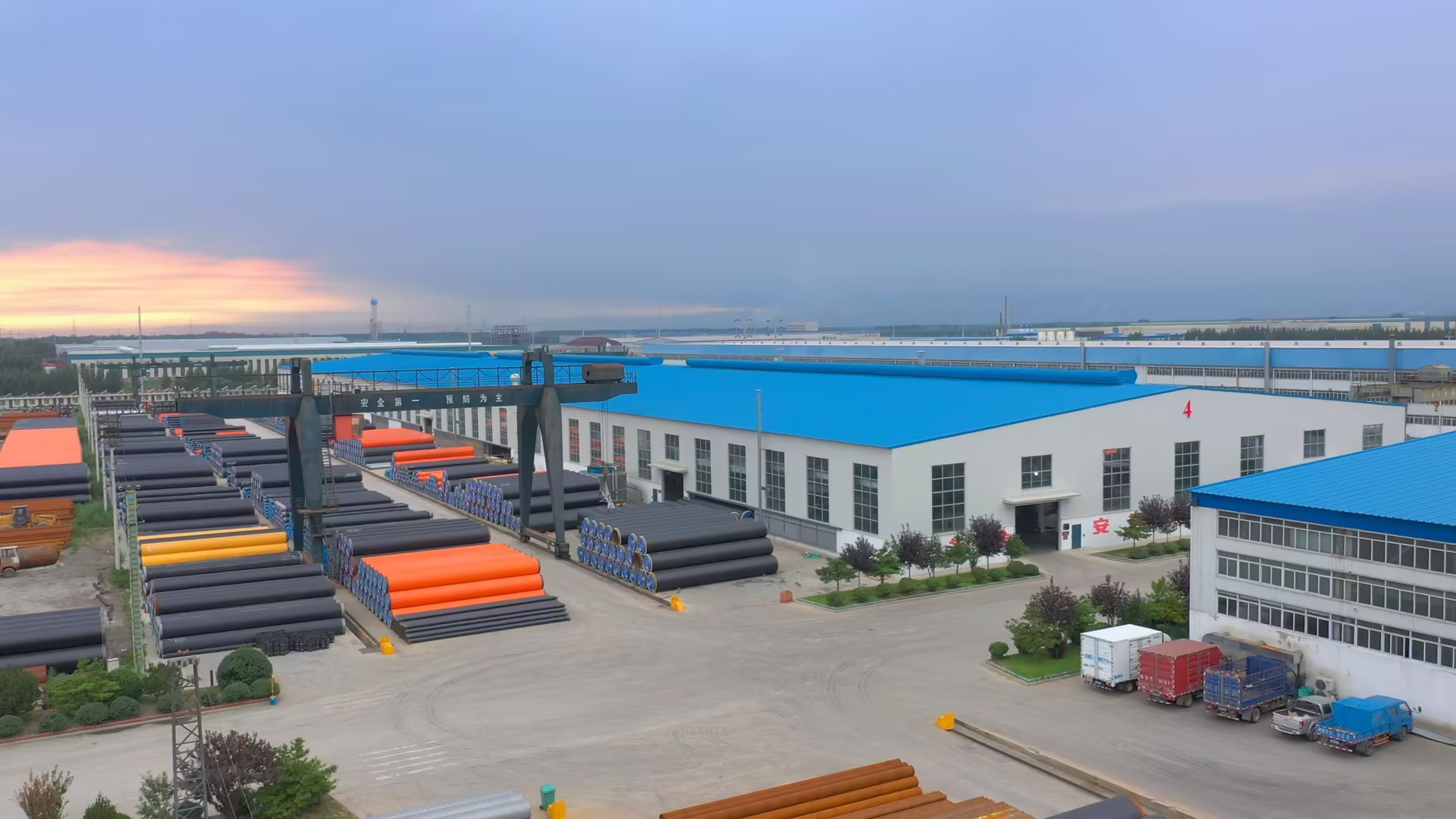
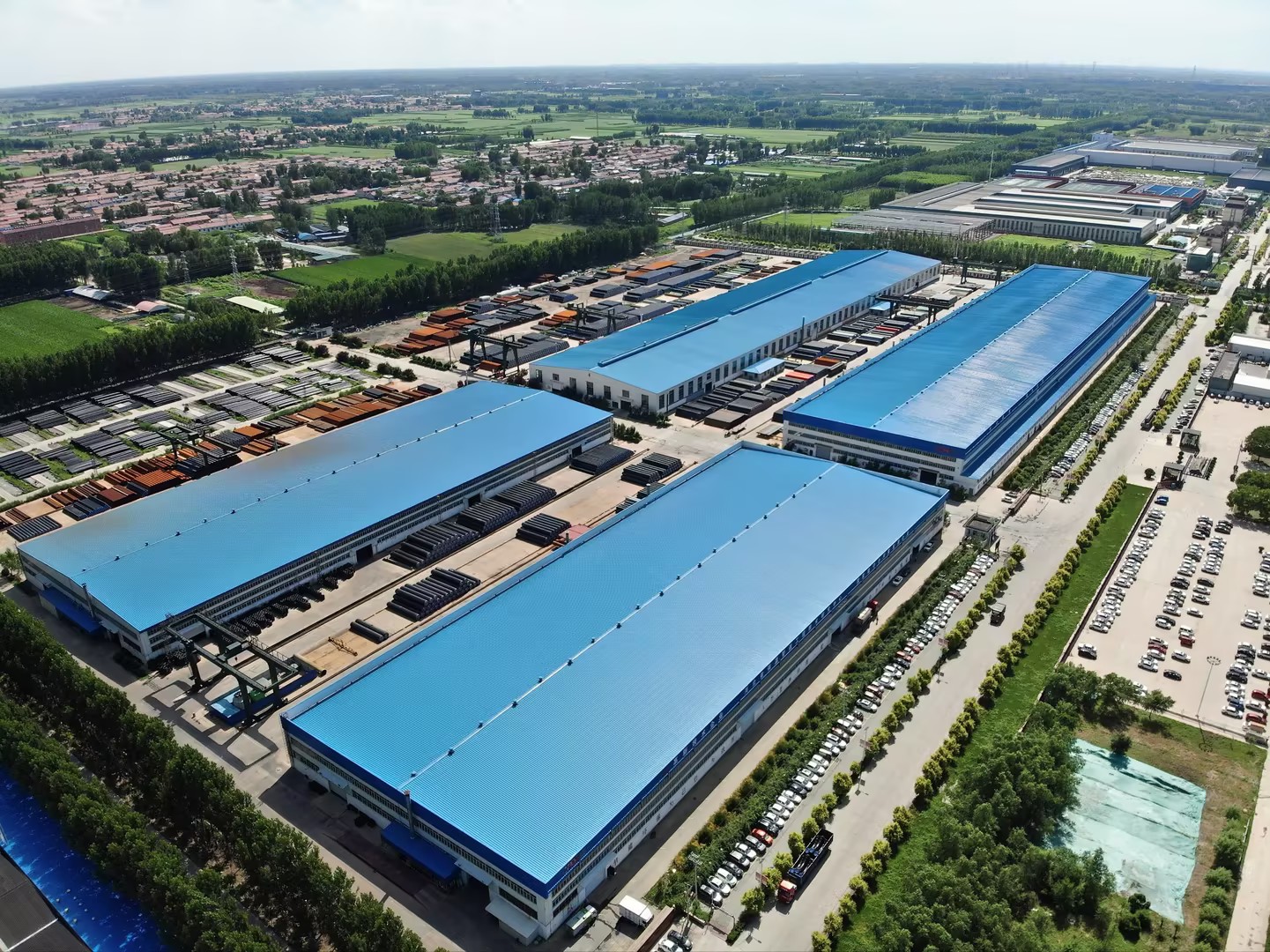
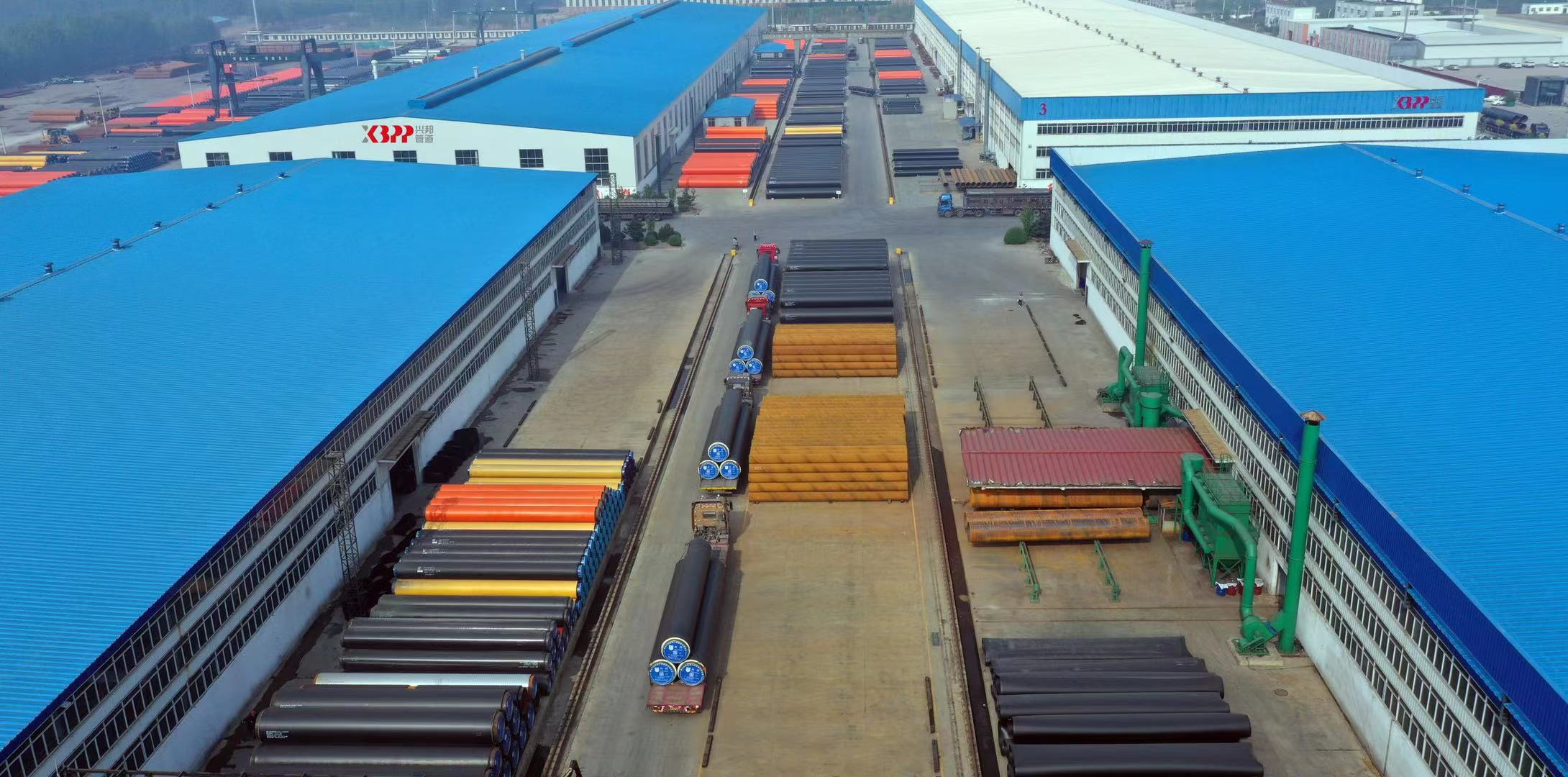
Tangshan Xingbang Pipeline Engineering Equipment Co., Ltd (Xingbang) is a Chinese manufacturer of directly buried hot water pre insulated pipe and a participant in the formulation of the national standard for directly buried insulation pipes. The company is based in Houhu Industrial Park, Yutian Economic Development Zone, Hebei Province, China, and its insulation pipe output serves central heating, central cooling, petroleum, chemical, LNG, gas, and water conservancy applications. That positioning matters for this topic. Standard participation is precisely the environment in which acceptance criteria are assumed to be obvious — and precisely where they need to be written down.
Detailed Solution: Lock Four Commercial Terms Before the Order Is Confirmed
Xingbang publishes a documented purchasing-terms baseline for pre insulated pipe orders. It is compact enough to use as the backbone of a quotation review:
| Purchasing term | Documented value | What it actually decides |
|---|---|---|
| MOQ | 500 meters | The smallest volume the supplier will schedule as a production run. Below it, the buyer is asking for a custom arrangement rather than a standard order. |
| Delivery terms | FOB / CIF | The point at which risk and freight responsibility transfer — and therefore who owns the pipe while an acceptance question is open. |
| Acceptance criteria | Pre-shipment test | The moment of verification. Acceptance is confirmed at the factory before dispatch, not after arrival at site. |
| Payment terms | 30 / 70 | The two payment events. The balance is the commercial instrument that keeps the acceptance result meaningful. |
These four lines are the minimum. In practice, each one needs an additional written sentence to become dispute-proof.
MOQ: 500 meters
The documented minimum order quantity for pre insulated pipe is 500 meters. The purchasing consequence is straightforward: an order below that threshold is not a policy exception, it is a different commercial discussion. Buyers planning a pilot section should size it against the documented minimum rather than assume the supplier will flex.
Delivery terms: FOB / CIF
Both Incoterms are documented. The choice is not a formality in an acceptance context. Under FOB, the buyer's exposure begins earlier; under CIF, the supplier carries the freight arrangement to the named destination port. Whichever is selected, the order should name the port explicitly, because “FOB” without a location is an incomplete term that returns later as a dispute.
Acceptance criteria: pre-shipment test
This is the single most important line in the document. A pre-shipment test means the acceptance decision happens before the goods leave the factory. That is a strong position for a buyer, because correcting a batch at the production site is cheaper than correcting it after a sea freight leg. It only works, however, if the order converts the phrase into a named list of what is checked and a named record that proves it.
Payment terms: 30 / 70
The documented split is 30/70. The commercial logic is that the balance follows the acceptance result. If the balance is released before the pre-shipment test record is issued and reviewed, the acceptance criterion becomes decorative. The most common structural mistake in pre-insulated pipe orders is not an unfair payment split; it is a correct payment split that was never tied to a document.
Step-by-Step Breakdown: From Quotation to Handover
Step 1 — Fix the product description and standard reference at quotation
Before price, fix identity. The quotation should name the product (for example, directly buried hot water pre insulated pipe), the carrier pipe specification, and the standard document that governs it: EN 253 where it applies, ASTM A53 where the steel pipe is specified to that standard, or the project's own specification. Where a project medium exceeds the typical 120°C limit of polyurethane foam insulation, that is a specification conversation, not an acceptance argument, and it must be closed at quotation.
Step 2 — Define the scope of the pre-shipment test at quotation
“Pre-shipment test” should be expanded in the quotation into a defined scope: what is inspected, at which stage, on what batch basis, and in what form the result is delivered. Xingbang's manufacturing controls give a concrete frame for this. The company applies incoming raw material inspection, full-batch product performance testing, 3PE anti-corrosion treatment, and a high-density polyurethane thermal insulation layer, supported by built-in optical fiber temperature measuring sensors and a direct-buried pipeline online monitoring system. Each of those measures produces a record. The quotation should state which records accompany the shipment.
Step 3 — Anchor the commercial terms
Insert the documented terms as explicit clauses: MOQ 500 meters; delivery terms FOB or CIF with the named port; acceptance criteria pre-shipment test; payment terms 30/70 with the balance released against the acceptance record. Terms that appear on a quotation but not on the purchase order have a way of disappearing.
Step 4 — Convert the terms into an acceptance checklist at PO stage
The purchase order is where the quotation becomes enforceable. Rather than repeating “acceptance criteria: pre-shipment test,” the PO should carry a short enumerated checklist. A workable structure groups the checks by the risk type each criterion is meant to control:
| Risk type | Control method | Evidence to require at handover |
|---|---|---|
| Pipeline corrosion | Anti-corrosion coating protection | 3PE anti-corrosion treatment record |
| Excessive heat loss | Thermal insulation protection | High-density polyurethane thermal insulation layer specification and batch test record |
| Thermal stress damage | Stress relief structural design | Design confirmation against the project temperature profile |
| High-temperature overheating | Real-time temperature monitoring | Built-in optical fiber temperature measuring sensor verification and direct-buried pipeline online monitoring system handover |
| Incoming material defects | Incoming raw material inspection | Incoming raw material inspection record |
| Batch-level performance variation | Full-batch product performance testing | Full-batch product performance test report |
This table is the difference between a phrase and a criterion. It also tells the supplier exactly what to prepare, which removes the most common cause of last-minute delay: records that exist but were never requested in a usable form.
Step 5 — Verify before dispatch, not after arrival
Because the documented acceptance criterion is a pre-shipment test, the review window sits between test completion and loading. This is the moment to compare the test record against the PO checklist, confirm batch identification, and confirm that the documentation set is complete in the agreed language. A delivery is only “acceptable” when both the physical result and the documentary result match the order — an ambiguity that most disputes trace back to.
Step 6 — Pre-agree the remedy ladder for a failed check
A failed acceptance check should be an expected event with a defined path, not a crisis. The PO should state in advance what happens if a check is not met: re-test, rework, or replacement; at whose cost; with what effect on the shipment schedule; and with what effect on the 30/70 payment events. Defining remedies before a failure occurs is the highest-value clause in the entire document, because it converts a confrontation into a procedure.
Use Cases: Where Acceptance Terms Decide the Project
Directly buried hot water district heating networks
This is the application Xingbang's production focus is built around. The acceptance-relevant question is not whether the pipe is insulated, but whether the bonded system, jacket integrity, and anti-corrosion treatment match the referenced standard. In a pre insulated district heating pipe order, a pre-shipment test that does not name the standard leaves the buyer with no basis to reject on the item that matters most.
Pre-insulated pipe for chilled water and district cooling
District cooling is a fast-developing segment: pre-insulated pipes for district cooling show a projected CAGR of 9.48%, driven by rising smart city projects. Chilled water applications shift the acceptance emphasis toward vapour barrier continuity and moisture control rather than high-temperature tolerance, which means a generic “insulation tested” statement is inadequate. The PO checklist for pre-insulated chilled water pipes should name chilled-water-specific checks rather than inherit a hot water template.
Industrial plant hot and chilled water networks
Mixed-temperature plants frequently run both hot water and chilled water lines inside one procurement package. The cleanest approach is to split the acceptance checklist by line type in the PO, so that one specification is not applied to both. Industrial projects also carry the highest consequence for a wrong acceptance decision, because re-opening a trench costs far more than re-testing a batch.
Above-ground sections inside a buried project
Projects often include above-ground runs using galvanized iron jacket pre insulated pipe alongside buried sections. Above-ground sections introduce UV exposure, mechanical impact, and jacket appearance criteria that a buried-only acceptance checklist does not cover. If the PO carries a single list, the above-ground portion will fail on criteria that were never written for it.
Projects exceeding the PU foam temperature limit
Where a project medium exceeds the typical 120°C limit of polyurethane foam insulation used in EN 253 pipes, the correct response is a specification change at quotation stage. Attempting to resolve it during acceptance is the clearest example of a dispute that was created months earlier.
Comparison Table: Acceptance-Relevant Differences in Insulation Approach
The table below reproduces the comparison values recorded for pre-insulated pipe against conventional onsite insulated pipe. It belongs in this guide because the insulation approach determines which acceptance checks are meaningful — and where responsibility for performance sits.
| Comparison dimension | Pre-insulated pipe | Conventional onsite insulated pipe |
|---|---|---|
| Energy performance | Energy saving | Baseline for comparison |
| Recorded performance gap | 0.4℃/km | — |
| Cost difference | 10% lower | — |
| Maintenance | Less maintenance | — |
| Efficiency | Higher efficiency | — |
| Best for | Central heating supply | — |
The purchasing implication is direct. When insulation is factory-applied, the buyer can verify performance before dispatch. When insulation is applied on site, part of the performance risk shifts into the construction phase and out of the supplier's acceptance scope. That is a reason to make the split of responsibility explicit in the order — not a reason to argue about it at delivery.
Frequently Asked Questions
EN 253 is the industry standard for pre-insulated bonded pipe systems for directly buried hot water networks, and ASTM A53 is a primary American standard for seamless and welded black and hot-dipped galvanized steel pipe. Where the carrier pipe is specified in the American system and the insulation system in the European system, the purchase order should state which document governs which component. Polyurethane foam insulation used in EN 253 pipes typically withstands temperatures up to 120°C (250°F), so any project operating above that range needs a specification decision before the order rather than an acceptance argument after it.
Under Xingbang's documented acceptance criterion, the pre-shipment test is the verification point. The manufacturing controls behind it include incoming raw material inspection, full-batch product performance testing, 3PE anti-corrosion treatment, a high-density polyurethane thermal insulation layer, built-in optical fiber temperature measuring sensors, and a direct-buried pipeline online monitoring system. A buyer's PO should specify which of those records to receive and in what form. Records that are produced but never requested are the most frequent reason a handover stalls.
Xingbang's documented purchasing terms are MOQ 500 meters, delivery terms FOB/CIF, acceptance criteria pre-shipment test, and payment terms 30/70. For budgeting purposes the commercial structure matters as much as the unit price: because acceptance is applied before dispatch, the cost of a re-test or rework sits inside the production window rather than in freight, storage, or site re-handling. On the insulation side, recorded comparison data shows a 10% lower cost position and a 0.4℃/km performance gap versus conventional onsite insulated pipe.
The documented minimum order quantity is 500 meters, and the documented acceptance criterion is a pre-shipment test — meaning validation happens at the factory before dispatch. The practical route is to convert the quotation's acceptance phrase into a PO checklist tied to the risk types the criteria are meant to control, then release the 70% balance only against the resulting acceptance record. Buyers who want to review the full product and process scope before structuring that checklist can request a quotation and the Xingbang product catalogue through the contact channels at the end of this page.
Delivery terms are documented as FOB/CIF and the payment split as 30/70. The combination protects both sides only when the named port is written into the order and the balance is linked to the acceptance result rather than to the shipment date. The order should also state what happens in the event of a failed check — re-test, rework, or replacement — and how that affects the schedule. Agreeing the remedy in advance is what keeps a single failed check from becoming a stalled order.
Conclusion: Write the Acceptance Criteria Before You Need Them
Pre-insulated pipe acceptance disputes are almost always created at quotation stage and discovered at handover. The documented baseline for a Xingbang order — MOQ 500 meters, FOB/CIF delivery, pre-shipment test acceptance, and 30/70 payment — already removes most of the ambiguity. What remains is the buyer's task: name the standard, define the test scope, convert the terms into a PO checklist grouped by risk type, verify before dispatch, and pre-agree what happens when a check fails.
Done in that order, “acceptable” stops being an opinion and becomes a document both parties signed. For a distributor, an EPC contractor, or a municipal utility planning a multi-year programme, that is what turns a transactional delivery into a supplier relationship worth keeping.
Next Step
Xingbang — Tangshan Xingbang Pipeline Engineering Equipment Co., Ltd — manufactures directly buried hot water pre insulated pipe and supplies insulation and anti-corrosion pipeline solutions from Houhu Industrial Park, Yutian Economic Development Zone, Hebei Province, China.
To build an acceptance checklist for your project, request a quotation and the full product catalogue:
- Website: www.xingbanginsulatedpipe.com
- Email: xbinsulatedpipe@xingbang1995.com
- WhatsApp: +86 188 3335 8018
- Phone: +86 18331518911
- Product catalogue (PDF): download the Xingbang brochure
Have Questions or Need More Details?
Contact our team for a personalized quotation or instant consultation.
Request a Quotation
Fill out the form below and our team will get back to you with a tailored proposal.
WhatsApp Direct Chat
Prefer to chat in real-time? Message us on WhatsApp for instant assistance & quick answers.
- Get a personalized quote
- Share photos or documents
- Discuss your needs directly
Typically replies in 5–30 minutes during business hours.