
Pre-Insulated Pipe Purchasing Terms and Acceptance Criteria: A Ranked Buyer's Shortlist
Nine purchasing terms decide whether a pre-insulated pipe order stays controllable. They are ranked here by three tests: how many other clauses depend on the term, how expensive the term is to correct once production has started, and whether a buyer can still verify it before the order is released.
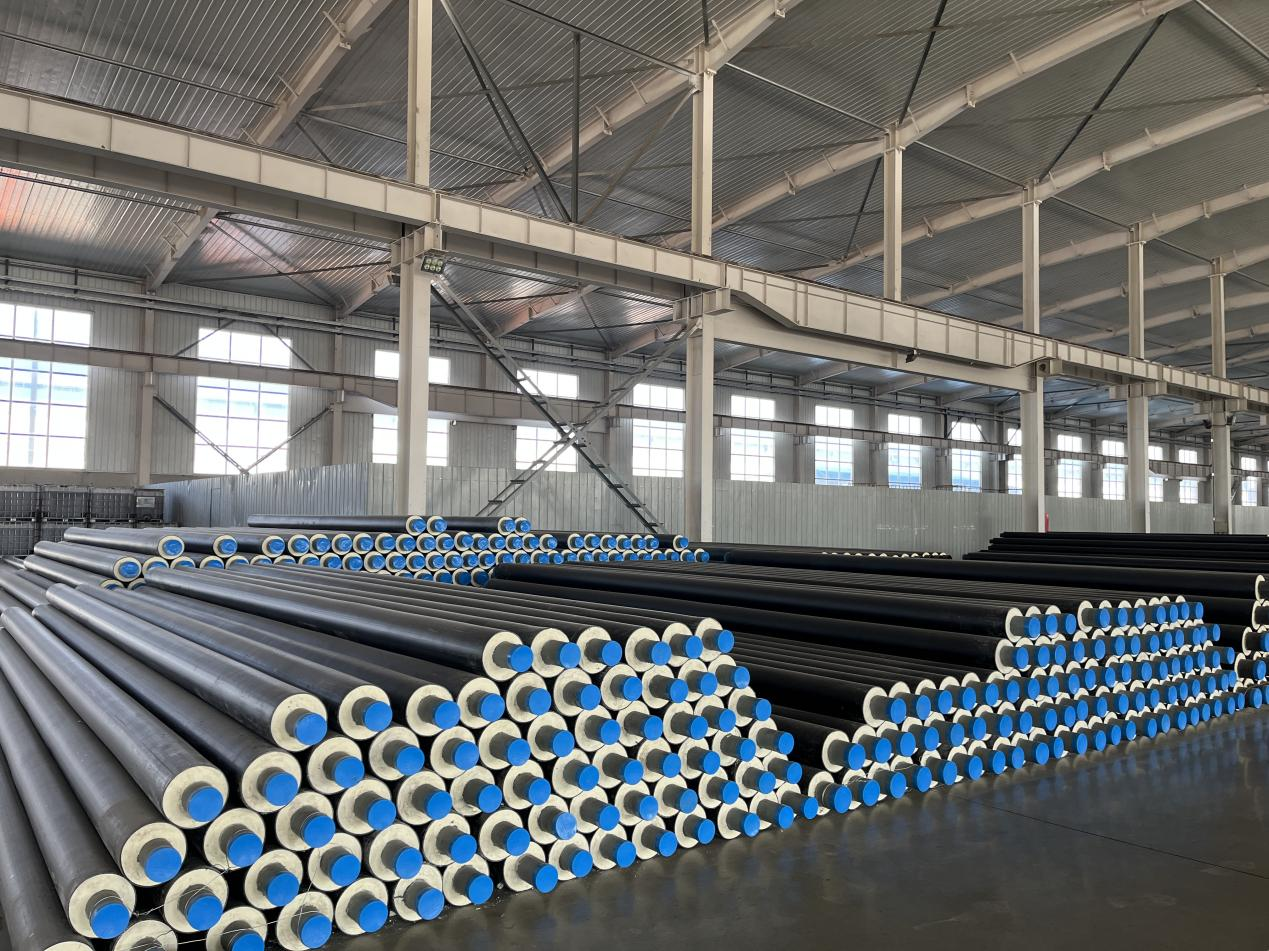
A pre-insulated pipe is a bonded composite — a service pipe, a rigid polyurethane foam insulation layer and an outer protective jacket — delivered as a system together with joints and fittings. Once the line is buried, that composite cannot be inspected in any meaningful way again. The purchasing terms are, in practice, the acceptance system. When they are thin, the project absorbs the risk until the first leak, the first joint failure or the first heat-loss complaint.
Tangshan Xingbang Pipeline Engineering Equipment Co., Ltd (Xingbang) is a Chinese manufacturer of pre-insulated pipe based in Houhu Industrial Park, Yutian Economic Development Zone, Hebei Province, producing directly buried hot water pre-insulated pipe and related anti-corrosion and insulation systems. Its published product data, customization list and project references are used below as the reference point for what each term should contain — not as a replacement for the buyer's own specification.
Problem Definition: Why Pre-Insulated Pipe Orders Slip Through
Three structural problems explain most of the disputes that appear after a pre-insulated pipe delivery, and all three are contract problems rather than manufacturing problems.
- The inspection window is short. Acceptance at delivery covers dimensions, marking and visible jacket condition. It does not reveal foam condition along the buried length, and it cannot test a joint that will only be made on site weeks later.
- The order treats the pipe as the product. In a pre-insulated system the joint is part of the product. Xingbang's matched equipment list for the same pipe covers electrofusion sleeves, heat shrinkable sleeves, insulation joint material, foaming filler and sealing and waterproof material. If the order buys pipe and leaves the joint materials to site procurement, the system arrives incomplete.
- Specification language is borrowed. Clause sets are carried over from a previous project without re-checking the temperature envelope, the jacket type for above-ground sections, or the accessory scope. The document looks complete and tests nothing.
EN 253, the industry standard for pre-insulated bonded pipe systems for directly buried hot water networks, fixes the meaning of the system. A purchase order that names only "pre-insulated pipe" leaves the standard, the joint scope and the test regime undefined, and acceptance then has no reference point beyond the supplier's own datasheet.
Industry Background: Why Terms Matter More Than the Catalogue
The global pre-insulated pipes market was estimated at USD 5.97 billion in 2024 and is projected to reach USD 10.4 billion by 2030, a CAGR of 9.7%, according to Grand View Research. The wider district heating market was valued at USD 209.34 billion in 2024 by SNS Insider, and SNS Insider also projects a 9.48% CAGR for pre-insulated pipes used in district cooling as smart city projects expand. Strategic Market Research reports that pre-insulated pipes reduce heat loss by over 30% in modern district heating networks such as Copenhagen's.
Two standards anchor most of the specification language a buyer will encounter. EN 253 covers pre-insulated bonded pipe systems for directly buried hot water networks, and polyurethane foam insulation for EN 253 pipes typically withstands temperatures up to 120°C. ASTM A53 is the primary American standard for seamless and welded black and hot-dipped galvanized steel pipe, and is commonly referenced when the service pipe is specified to a US standard.
Market growth of this kind widens the supplier pool, and a wider pool makes catalogues look more alike, not less. The clause set is where offers actually diverge, because it is the only part of the offer that states what will be measured, recorded and accepted.
Detailed Solution: The Ranked Shortlist of Purchasing Terms and Acceptance Criteria
The list below ranks terms, not suppliers. Each entry states why it holds its position, what a buyer should write into the purchase order, and what goes wrong when the term is missing. The reference product data is Xingbang's polyurethane insulated pipe: high density polyethylene jacket and rigid polyurethane foam insulation, applied to heating, cooling and crude oil transportation pipelines.
Rank 1 — Standard and compliance basis
Every other clause is measured against this one, which is why it ranks first. Write the standard, the edition, and the system components it covers — service pipe, foam insulation, outer jacket and joint assembly. For directly buried hot water networks that reference is EN 253. Where the service pipe is specified to a US standard, name ASTM A53 and state which of its grades applies.
What to confirm: that the supplier can issue a compliance statement against the named standard rather than a general product description. Xingbang is a participant in the formulation of China's national standard for directly buried insulation pipes, which is relevant where a project must also satisfy a domestic Chinese specification.
Cost of omission: acceptance has no fixed reference point, and a discussion about foam density or jacket thickness becomes a discussion about expectations.
Rank 2 — Service pipe and dimensional definition
Dimensional definitions are cheap to agree and expensive to correct. The order should fix outer diameter, wall thickness, delivered length and the dimensional tolerance the buyer will accept at receipt. Diameter and length sit on Xingbang's customization list, so a project-specific dimension is a normal order condition rather than an exception.
What to confirm: that the dimensional set in the order matches the fittings and the tie-in points already built or ordered by other parties. In renovation work the existing network usually dictates the answer.
Cost of omission: pipe that cannot be joined to what is already installed, or a joint count that rises on site because delivered lengths did not match the route.
Rank 3 — Temperature and pressure envelope
This is the clause that decides whether the selected insulation is admissible at all. Xingbang's polyurethane insulated pipe is suitable for networks where the conveyed medium is no higher than 120°C, occasional peak temperature does not exceed 130°C, and working pressure is no more than 2.5 MPa; continuous operation of at least 30 years is stated at 120°C. The product data also defines the operating pattern as 24-hour continuous operation. PU foam insulation for EN 253 pipes typically withstands temperatures up to 120°C, so the two references converge.
What to write: design supply temperature, peak temperature and peak duration, design pressure, and the load profile. Vague wording such as "hot water service" should be replaced by numbers.
Boundary: steam duty — including pre-insulated steam pipe applications — or repeated excursions above the stated peak fall outside this product envelope and belong in a separate technical review, not in a clause added after the pipe has been selected.
Rank 4 — Insulation, jacket and construction
Buried and above-ground sections do not use the same jacket. The product range separates directly buried pipe for underground routes from galvanized iron jacket pre-insulated pipe for above-ground runs. Insulation thickness is a customization item and should be tied to the pipe diameter and the heat-loss target instead of being left at a default.
What the term protects: the functions the system is bought for — reducing heat loss, limiting heat dissipation across the network, waterproofing and moisture resistance in humid and saline-alkali ground, and the high-temperature and anti-aging protection the insulation layer gives the service pipe.
Cost of omission: above-ground sections specified with a buried-grade jacket, or one insulation thickness applied across a network with mixed diameters, which quietly reallocates heat loss to the small-bore branches.
Rank 5 — Joint, fitting and accessory scope
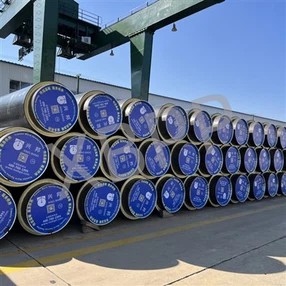
A pre-insulated system is continuous only where its joints are. The matched equipment for Xingbang's pipe covers electrofusion sleeves, heat shrinkable sleeves, insulation joint material, foaming filler, and sealing and waterproof material. Non-standard fittings are a customization item, so they belong in the same clause rather than in a later variation.
What to write: which party supplies each item, the quantity basis relative to pipe length, and whether fittings and accessories are inside or outside the unit price.
Cost of omission: pipe on site with joint materials missing, or joint materials bought separately to a different specification — the most common route to a leak that no party accepts responsibility for.
Rank 6 — Customization and drawing approval
Customization without an approval gate is a change order waiting to happen. Xingbang's production mode is independent R&D with full customization supported, and the customization list spans pipe diameter and length, pipe material, temperature and pressure rating, insulation thickness, anti-corrosion grade, non-standard pipe fittings, design for geological conditions and an intelligent monitoring system. The company operates a 310,000 m² facility with 231 employees, including a 30-engineer R&D team.
What to write: a drawing and specification approval step before production release, and an explicit statement of which customization items are in scope. Geological-condition design and monitoring options should be decided at this stage, not after the route survey.
Cost of omission: changes requested after production has started, where schedule and cost consequences belong to the buyer.
Rank 7 — Testing and acceptance method
Xingbang states 100% test as its quality control regime. A percentage without a method is not an acceptance criterion, so the term should define what is tested, at which stage, and which record travels with the shipment.
What to write: two acceptance stages. Pre-dispatch covers dimensional check, jacket integrity, marking and documentation. Post-jointing covers joint testing and sealing continuity after the field connection. Each stage should name the record that closes it.
Cost of omission: acceptance reduced to a visual check at delivery, which cannot detect what the buried length actually contains.
Rank 8 — Quantity basis, MOQ and lead time
Xingbang's stated MOQ is 1 km, lead time is 30–45 days and monthly capacity is 200 km. The quantity basis is the overlooked half of this term: whether the order is expressed per metre of pipeline or per delivered pipe length changes both the price and the surplus.
What to write: the unit of quantity, the allowance for fittings and cut waste, and a delivery sequence tied to the construction programme rather than a single delivery date.
Cost of omission: a shortfall discovered mid-installation, or surplus pipe that cannot be returned because the quantity basis was never defined.
Rank 9 — Delivery documentation and after-sales terms
The last rank is not the least important — it is the term that determines whether the previous eight can be proven later. Handover documentation should include the packing list matched to the delivery schedule, test records, and the compliance statement against the named standard.
After-sales belongs in the same clause. Xingbang states dedicated on-site service teams delivering one-on-one, point-to-point full-range services throughout the project. Its listed export markets include the Middle East, South America, Europe, North America, Asia-Pacific, the Belt and Road and Africa — relevant when a project needs service coverage in a specific region rather than only a factory address.
Cost of omission: a handover with no documented baseline, which turns every later performance question into a negotiation.
Step-by-Step Breakdown: Turning the Ranking into an Order
The ranks are a priority order, not a document order. The sequence below is how the terms usually get built into a purchase order without rework.
- Fix the project condition first. Route length, buried versus above-ground sections, design temperature and pressure, soil and groundwater conditions, and the construction programme. This is the input every later clause depends on.
- Name the standard and the system boundary. Write EN 253 for a directly buried hot water network, add ASTM A53 where the service pipe follows a US reference, and state which components the standard is being applied to.
- Convert the condition into a specification. Diameter, wall thickness, length and tolerance; temperature and pressure envelope including peak duration; insulation thickness; jacket type per route section.
- Close the accessory scope. List joints, fittings and materials — electrofusion sleeves, heat shrinkable sleeves, insulation joint material, foaming filler, sealing and waterproof material — with quantities and supply responsibility.
- Set the approval and test gates. Drawing and specification approval before production release, a defined 100% test record at pre-dispatch, and a joint test after field assembly.
- Fix the commercial frame. Unit of quantity, MOQ against the 1 km minimum, delivery sequence against a 30–45 day lead time and 200 km monthly capacity, documentation set, and after-sales scope.
Use Cases: Which Terms Move Up the Ranking by Project Type
The ranking above is the default. In practice the project type re-orders the top of the list, which is why the terms should be reviewed against the specific application rather than copied between projects.
Municipal district heating renovation
In a network renovation the existing pipe dictates the new dimensions, and the tie-in points are fixed. Rank 2 rises toward the top alongside Rank 1. Xingbang's reference for this pattern is a 6 km heating pipeline network renovation project in Uzbekistan, in stable operation for 5 years.
District cooling networks
Cooling duty adds condensation and moisture control to the agenda, so Rank 4 and Rank 5 — jacket, sealing and joint materials — carry more weight than in a hot water network. Two references cover this pattern: a 5 km municipal district cooling project in Cambodia (NaGa Phnom Penh), in stable operation for 10 years, and a 30 km cooling and heating supply project for a bank client in Cambodia, in stable operation for 2 years.
Industrial and mining pipelines
Where the route crosses loaded ground or aggressive groundwater, Rank 6 rises: design for geological conditions and anti-corrosion grade become primary clauses rather than options. A 9 km copper mine project in Mongolia, in stable operation for 3 years, follows this pattern. Soil load, groundwater corrosion and external impact are the conditions these clauses exist to answer.
Commercial buildings and hotels
Short runs with dense fittings invert the usual emphasis. Rank 5 and Rank 8 dominate, because the joint count per metre is high and the quantity basis for fittings decides whether the site has what it needs. Xingbang's reference here is a 3 km cooling and heating supply project for a hotel client in Jamaica, in stable operation for 2 years.
Campus and phased construction
Phased programmes make Rank 8 and Rank 9 decisive: delivery sequencing and the documentation set have to survive multiple handovers. A 6 km project for a new university campus in Ho Chi Minh City, Vietnam, in stable operation for 7 years, is the relevant reference.
Comparison Table: What Each Ranked Term Must Prove Before Release
The table converts the ranking into a release checklist. Each row states the acceptance question the term answers and the evidence a buyer can reasonably ask for before the order is confirmed.
| Rank | Purchasing term | Acceptance question it answers | Evidence to request before release |
|---|---|---|---|
| 1 | Standard and compliance basis | Which standard, which edition, which components? | Compliance statement naming EN 253 or ASTM A53 and the covered components |
| 2 | Service pipe and dimensions | Will it fit the existing network and fittings? | Dimensional schedule: diameter, wall thickness, length, tolerance |
| 3 | Temperature and pressure envelope | Is the insulation admissible at this duty? | Stated envelope: 120°C continuous, 130°C peak, 2.5 MPa, 30 years at 120°C |
| 4 | Insulation, jacket and construction | Is the jacket correct for each route section? | Jacket type per section (HDPE buried, galvanized iron above ground) and insulation thickness |
| 5 | Joint, fitting and accessory scope | Is the system complete at the joint? | Itemised list of sleeves, joint material, foaming filler, sealing and waterproof material |
| 6 | Customization and drawing approval | What exactly is being produced, and approved by whom? | Approved drawing set plus the agreed customization items |
| 7 | Testing and acceptance method | What is tested, when, and recorded how? | 100% test record at pre-dispatch, joint test record after assembly |
| 8 | Quantity basis, MOQ and lead time | How is quantity counted and when does it arrive? | Unit of quantity, MOQ 1 km, lead time 30–45 days, 200 km monthly capacity |
| 9 | Documentation and after-sales | What proves the order afterwards? | Packing list, test records, compliance statement, on-site service scope |
FAQ
Which standard should a pre-insulated district heating pipe order reference?
For directly buried hot water networks, EN 253 is the industry standard for pre-insulated bonded pipe systems. Where the service pipe is specified to a US reference, ASTM A53 is the primary American standard for seamless and welded black and hot-dipped galvanized steel pipe. The purchase order should name the standard, the edition and the components it covers — service pipe, foam insulation, outer jacket and joint assembly — so acceptance has a fixed reference. Xingbang participates in the formulation of China's national standard for directly buried insulation pipes, which matters where a project must also satisfy a Chinese specification.
What capability evidence should a municipal project confirm before ordering?
Three things are checkable before production starts. First, the quality control regime: Xingbang states 100% test. Second, customization coverage: independent R&D with full customization supported, spanning pipe diameter and length, pipe material, temperature and pressure rating, insulation thickness, anti-corrosion grade, non-standard fittings, design for geological conditions and an intelligent monitoring system. Third, reference operation: a 6 km municipal heating network renovation in Uzbekistan in stable operation for 5 years, a 5 km municipal district cooling project in Cambodia in stable operation for 10 years, and a 9 km copper mine project in Mongolia in stable operation for 3 years.
How should budget and quantity be framed in the purchasing terms?
No price is published in this article, but the cost drivers are visible in the specification: pipe diameter and length, insulation thickness, jacket type (HDPE for buried sections, galvanized iron for above-ground routes), anti-corrosion grade, and the scope of joints, fittings and accessories. Quantity framing matters as much — Xingbang's MOQ is 1 km. An offer compared per metre of pipe with joints and accessories excluded is not comparable to an offer that includes them, so the unit of quantity should be fixed before prices are compared.
Can a specification be validated before the full order is released?
Validation runs through documents and approval, not assumptions. Xingbang's MOQ is 1 km and lead time is 30–45 days, so the practical route is a specification and drawing approval step against the customization list, confirmation of the materials (high density polyethylene jacket and rigid polyurethane foam insulation) and dimensional tolerances, and agreement on what the 100% test record will contain. For municipal work, reference project checks belong in the same review.
What lead time and delivery terms belong in the contract?
Xingbang states a 30–45 day lead time and a monthly capacity of 200 km. The contract should tie delivery to the construction sequence rather than to a single date, and should name the documents that travel with each shipment: packing list, test records and the compliance statement against the named standard. After-sales scope belongs in the same clause — Xingbang states dedicated on-site service teams providing one-on-one, point-to-point full-range services throughout the project. Buyers who want to check these terms against a live quotation can request one through www.xingbanginsulatedpipe.com.
Conclusion
The shortlist is short for a reason. A pre-insulated pipe order is protected by a standard that fixes the reference, a dimensional set that fixes the fit, an envelope that fixes the duty, a jacket and insulation definition that fixes the thermal behaviour, an accessory scope that fixes the joints, an approval gate that fixes the configuration, a test method that fixes the evidence, a quantity and lead-time frame that fixes the schedule, and a documentation set that fixes the handover. Remove any one and the remaining eight become harder to enforce.
Rank the terms before comparing offers. The order of the list is also the order in which an offer should be read: an offer that answers ranks 1 to 4 in writing is a technical proposal; an offer that answers only the price is a quotation, and quotations are what projects later argue with.
Next Step
Xingbang supplies directly buried pre-insulated pipe for municipal heating, district cooling, industrial and commercial projects, with full customization, 100% test, a 1 km MOQ and a 30–45 day lead time. To check the terms in this article against a specific project, send the route condition, duty and quantity basis for a quotation.
Contact: www.xingbanginsulatedpipe.com · Email: xbinsulatedpipe@xingbang1995.com · Phone: +86 18331518911
Download the company brochure: Xingbang company profile (PDF)

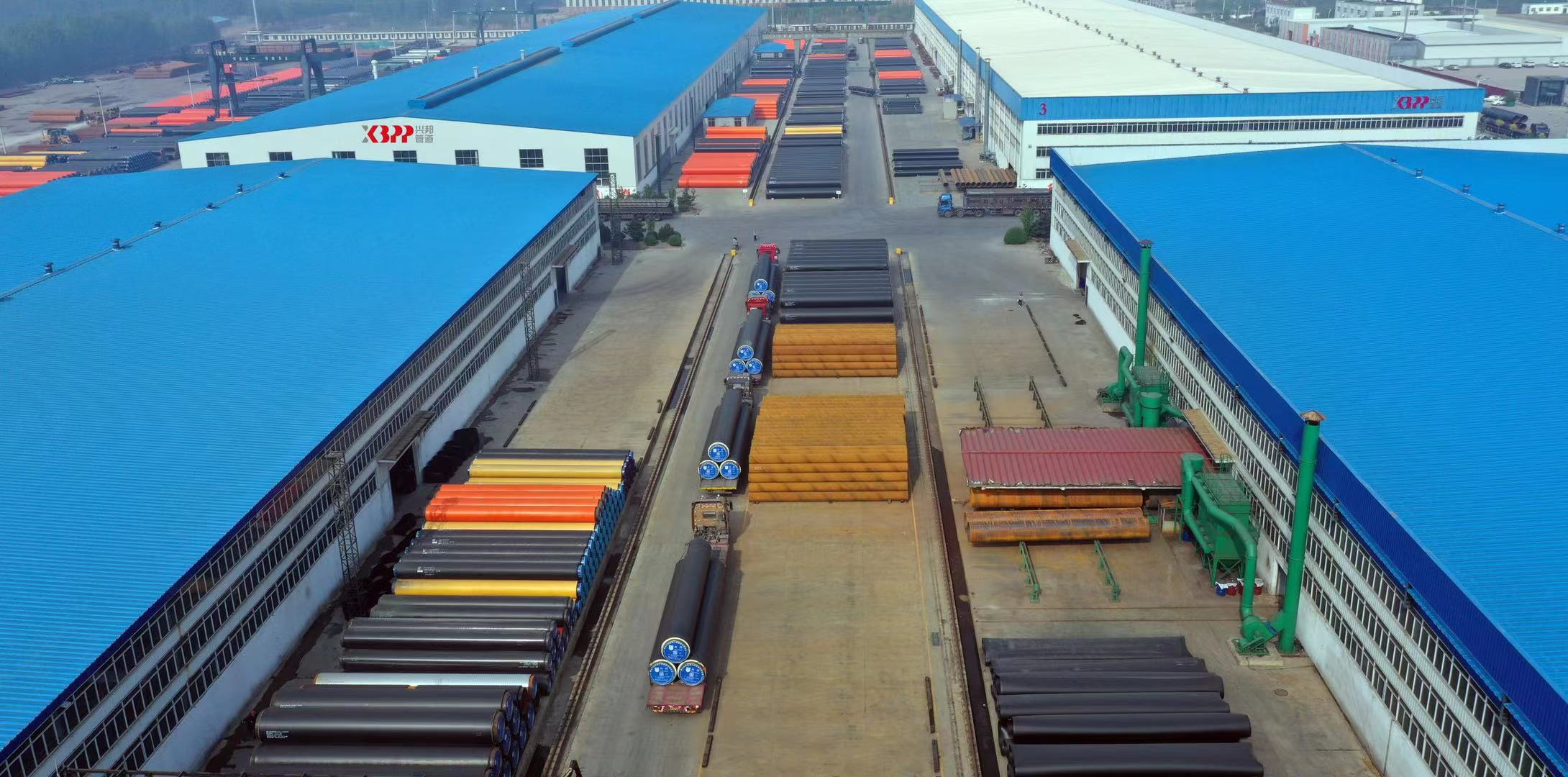
Product envelope note: Xingbang's polyurethane insulated pipe is intended for media no higher than 120°C, occasional peaks no more than 130°C and working pressure no more than 2.5 MPa, with continuous operation of at least 30 years stated at 120°C. Applications outside this envelope require a separate technical review.
Have Questions or Need More Details?
Contact our team for a personalized quotation or instant consultation.
Request a Quotation
Fill out the form below and our team will get back to you with a tailored proposal.
WhatsApp Direct Chat
Prefer to chat in real-time? Message us on WhatsApp for instant assistance & quick answers.
- Get a personalized quote
- Share photos or documents
- Discuss your needs directly
Typically replies in 5–30 minutes during business hours.