
Pre Insulated Pipe Selection for Municipal Hot Water Networks: A Project-Level Checklist
Pre Insulated Pipe Selection for Municipal Hot Water Networks: A Project-Level Checklist
Pre insulated pipe is a factory-made piping system for buried heating and cooling networks. For municipal hot water projects, the specification must be based on temperature, pressure, burial conditions, and continuous operation. This guide explains how engineers and procurement teams can match pre insulated pipe to real project conditions, with a focus on directly buried hot water networks and the capabilities of Tangshan Xingbang Pipeline Engineering Equipment Co., Ltd (Xingbang).
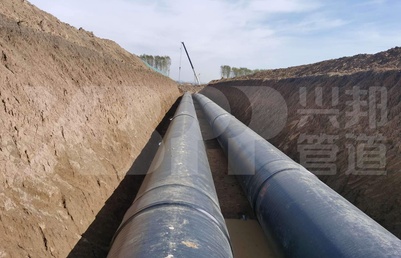
Problem Definition: Why Municipal Pipe Selection Is Not a Catalog Decision
Municipal projects place unusual demands on pipe networks. The pipe is buried directly in the ground, exposed to thermal expansion stress, soil load, groundwater corrosion, and external impact. The network may run 24 hours per day, and repair access is limited after installation.
If the insulation rating is too low for the operating temperature, heat loss increases and the network becomes inefficient. If the jacket is not waterproof enough, moisture can enter the foam and reduce insulation performance. If the pressure rating is exceeded, the service pipe can fail.
These conditions explain why project-type selection matters. Pre insulated pipe for municipal heating, industrial parks, residential communities, cogeneration, urban pipe network renovation, urban comprehensive pipe galleries, and commercial building heating all share the same base problem: matching the pipe system to the environment and the duty.
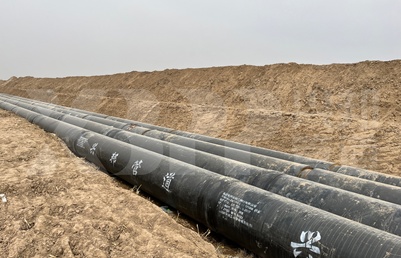
Industry Background: Pre Insulated Pipe in District Heating and Cooling
Pre insulated pipe demand is expanding with district heating and cooling capacity. The global pre-insulated pipes market was estimated at USD 5.97 billion in 2024 and is projected to reach USD 10.4 billion by 2030, according to Grand View Research. Asia Pacific accounted for the largest regional share at 39.96% in 2024.
The district heating market is also large. SNS Insider valued the global district heating market at USD 209.34 billion in 2024. For directly buried hot water networks, EN 253 is a widely referenced industry standard for pre-insulated bonded pipe systems. In modern networks such as Copenhagen's, pre-insulated pipes can reduce heat loss by more than 30%, according to Strategic Market Research.
These figures explain why municipal specifiers are moving from field-insulated pipes to factory-made PU foam pre insulated pipes with higher consistency and lower installation risk.
Product Platform: Polyurethane Pre-Insulated Pipe System
The central product for most municipal hot water projects is a directly buried hot water pre insulated pipe. Xingbang also lists this product as Polyurethane Insulated Pipe. It is supplied as a pre insulated pipe with a high-density polyethylene jacket and rigid polyurethane foam insulation. This combination is often described as PU foam pre insulated pipe or pre insulated thermal insulation pipe.
The usable operating envelope is defined as follows:
- Conveyed medium temperature: no higher than 120°C
- Occasional peak temperature: no more than 130°C
- Working pressure: no more than 2.5 MPa
- Design life: at least 30 years of continuous operation at 120°C
The product is widely applied to anti-corrosion, thermal insulation, and cold preservation pipeline projects in heating, cooling, and crude oil transportation.
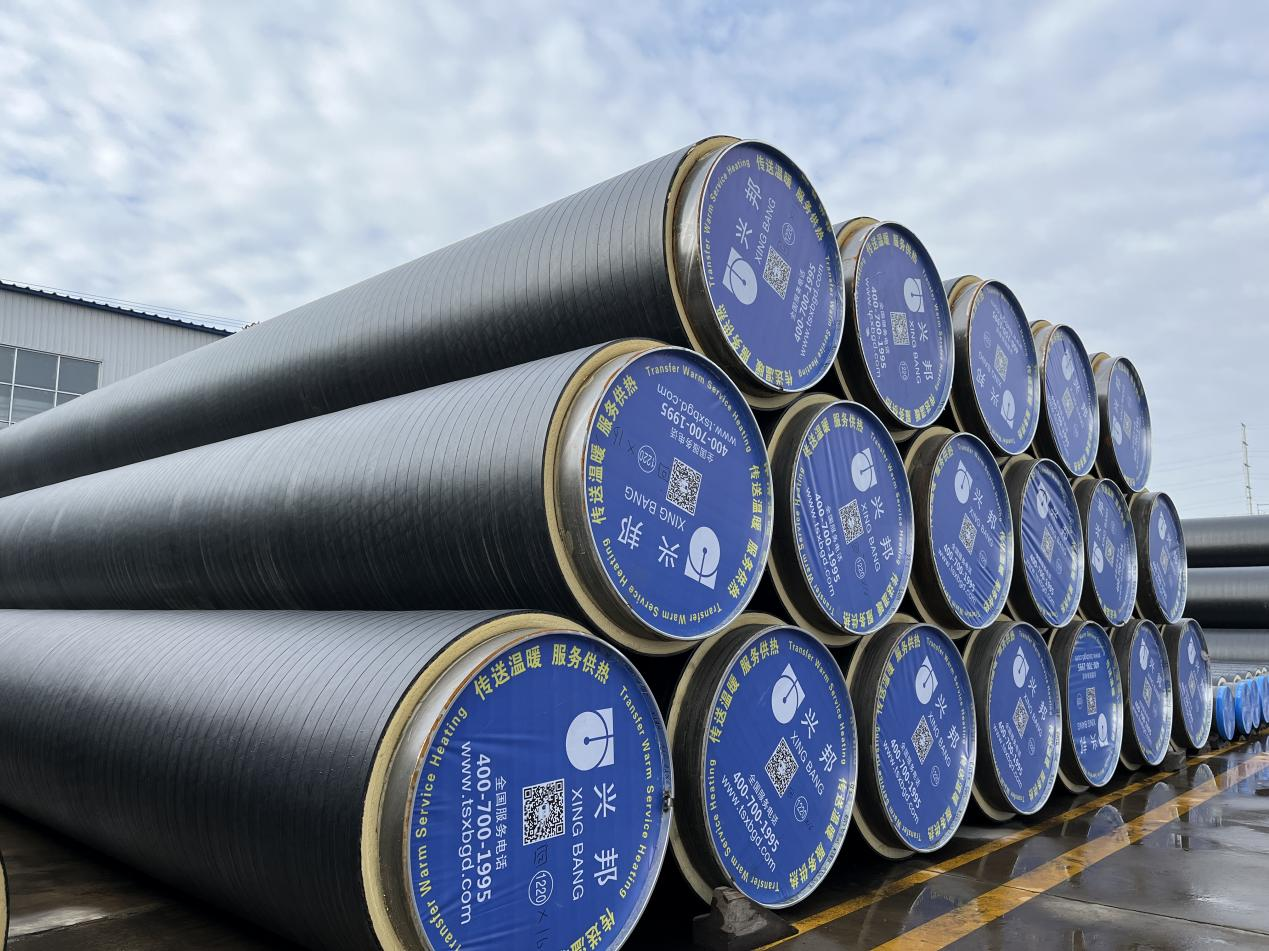
Manufacturer Context: Tangshan Xingbang Pipeline Engineering Equipment Co., Ltd
Tangshan Xingbang Pipeline Engineering Equipment Co., Ltd is located in Houhu Industrial Park, Yutian Economic Development Zone, Hebei Province, China. The company operates a 310,000-square-meter plant, employs 231 people, and has an R&D team of 30 engineers. Its registered capital is 190 million yuan.
Xingbang is a participant in the formulation of the national standard for directly buried insulation pipes and a member unit of the heating Standardization Technical Committee of the Ministry of Housing and Urban-Rural Development of the People's Republic of China. The company reports annual production capacity of more than 3,000 km of insulated pipe, with exports to Europe, North America, and the Middle East representing about 30% of business.
Step-by-Step Specification for Pre Insulated Pipe in a Municipal Project
The following workflow turns a project brief into a pipe specification.
- Define the operating duties. Document normal water temperature, occasional peak temperature, maximum working pressure, and required flow. For Xingbang PU foam pre insulated pipe, the normal limit is 120°C, occasional peak 130°C, and working pressure 2.5 MPa.
- Confirm installation mode. Choose between directly buried underground, above-ground, trench, or gallery installation. For underground networks, specify pre insulated pipe for underground with suitable joint sealing. For above-ground networks, review the need for a galvanized iron jacket pre insulated pipe or similar mechanical protection.
- Analyze site and soil conditions. Consider thermal expansion stress, soil load, groundwater corrosion, and external impact. These are the special requirements for directly buried systems. If geological conditions are unusual, the pipe design can be adapted for the project.
- Select dimensions and materials. Confirm pipe diameter, length, and service pipe material. Xingbang supports custom pipe diameter and length, custom pipe material, custom temperature and pressure rating, custom insulation thickness, custom anti-corrosion grade, and custom non-standard pipe fittings.
- Choose the insulation and jacket system. For standard hot water service, specify rigid polyurethane foam insulation with an HDPE jacket. The insulation thickness should be matched to the operating temperature and allowable heat loss.
- Plan field joints and accessories. For underground networks, include electrofusion sleeves, heat shrinkable sleeves, insulation joint material, foaming filler, and sealing/waterproof material. These accessories keep the insulation continuous at every joint.
- Confirm testing and delivery requirements. Xingbang states 100% test coverage for its pipe. Typical project planning values are a 1 km MOQ, 200 km monthly production capacity, and 30–45 days lead time.
Use Cases: How Pre Insulated Pipe Adapts to Different Project Types
Project references show how the same pipe platform can be used for heat and cold distribution in different sectors.
- Municipal heating renovation – Uzbekistan. A 6 km cooling and heating supply for municipal projects has remained in stable operation for 5 years.
- University construction – Vietnam. A new university project in Ho Chi Minh City used 6 km of pipe for cooling and heating supply; stable operation has been reported for 7 years.
- Copper mine – Mongolia. A copper mine project used 9 km of pipe for cooling and heating supply, with 3 years of stable operation.
- Bank complex – Cambodia. A 30 km cooling and heating supply for a bank project has operated stably for 2 years.
- Hotel – Jamaica. A hotel project used 3 km of pipe for cooling and heating supply, with 2 years of stable operation.
- District cooling – Cambodia. The NaGa Phnom Penh district cooling project used 5 km of pipe for cooling and heating supply, with 10 years of stable operation.
Each case lists heat preservation as a key highlight. For municipal buyers, this shows that pre insulated pipe can be adapted to long-term heating and cooling service.


Comparison: Published Xingbang Project References
| Project Type | Country | Quantity | Application | Reported Duration | Result |
|---|---|---|---|---|---|
| Bank project | Cambodia | 30 km | Cooling and heating supply | 2 years | Stable operation |
| Hotel project | Jamaica | 3 km | Cooling and heating supply | 2 years | Stable operation |
| Copper mine project | Mongolia | 9 km | Cooling and heating supply | 3 years | Stable operation |
| Municipal project | Uzbekistan | 6 km | Cooling and heating supply | 5 years | Stable operation |
| District cooling project | Cambodia | 5 km | Cooling and heating supply | 10 years | Stable operation |
| University project | Vietnam | 6 km | Cooling and heating supply | 7 years | Stable operation |
These references are drawn from Xingbang's published project records. Project-specific details should be confirmed with the manufacturer before a final specification.
FAQ: Pre Insulated District Heating Pipe for Municipal Projects
What standard and temperature limits apply to pre insulated district heating pipe for directly buried hot water networks?
EN 253 is a widely referenced industry standard for pre-insulated bonded pipe systems for directly buried hot water networks. Polyurethane foam insulation in typical pre insulated pipe withstands temperatures up to 120°C. Xingbang's polyurethane insulated pipe is suitable for media up to 120°C continuous service, occasional peaks up to 130°C, and working pressure up to 2.5 MPa. Under continuous operation at 120°C, the insulation system is designed for at least 30 years.
Can a pre insulated pipe manufacturer customize pipe size and insulation for municipal site conditions?
Yes. Xingbang supports custom pipe diameter and length, custom pipe material, custom temperature and pressure rating, custom insulation thickness, custom anti-corrosion grade, custom non-standard pipe fittings, custom design for geological conditions, and custom intelligent monitoring systems. This is important for underground networks where soil and groundwater conditions vary by site.
What quantity, lead time, and quality controls should a municipal project expect?
Xingbang's typical MOQ is 1 km, monthly production capacity is 200 km, and lead time is 30–45 days. The company states 100% test coverage. These planning figures should be confirmed for each project specification.
What project references are available for pre insulated pipe in heating and district cooling?
Published Xingbang references include a 30 km bank project in Cambodia, a 6 km municipal project in Uzbekistan, a 5 km district cooling project in Phnom Penh, a 6 km university project in Ho Chi Minh City, a 9 km copper mine project in Mongolia, and a 3 km hotel project in Jamaica. Reported durations range from 2 to 10 years, and all list stable operation as the result.
How should a project team start an inquiry for pre insulated pipe for hot water?
Prepare the operating temperature, pressure, pipe diameter, installation method, and site description. A project team can then contact Xingbang through the website, email, or WhatsApp for a project-specific response. The company also provides a downloadable brochure with product and company details.

Conclusion: Match the Pipe System to the Project, Not Just the Price
Municipal hot water projects depend on a pipe system that can handle continuous operation, thermal stress, and underground exposure. A pre insulated district heating pipe with PU foam insulation, HDPE jacket, and project-specific customization can reduce heat loss and simplify installation. The selection should be based on temperature, pressure, soil conditions, and manufacturer capability.
Tangshan Xingbang Pipeline Engineering Equipment Co., Ltd supplies directly buried hot water pre insulated pipe, pre insulated pipe for underground networks, pre insulated pipe for above-ground installations, pre insulated pipe for hot water, pre insulated pipe for chilled water, and other cooling and cold-preservation applications. For a project-specific recommendation, contact the company or download the brochure.
Download Xingbang Company BrochureWebsite: https://www.xingbanginsulatedpipe.com | Address: Houhu Industrial Zone, Yutian County, Tangshan City, Hebei Province, China | Phone: +86 18331518911 | Email: xbinsulatedpipe@xingbang1995.com | WhatsApp: +86 18833358018
Have Questions or Need More Details?
Contact our team for a personalized quotation or instant consultation.
Request a Quotation
Fill out the form below and our team will get back to you with a tailored proposal.
WhatsApp Direct Chat
Prefer to chat in real-time? Message us on WhatsApp for instant assistance & quick answers.
- Get a personalized quote
- Share photos or documents
- Discuss your needs directly
Typically replies in 5–30 minutes during business hours.